
Mobile bullying harms teens’ mental health, sleep, and safety. Discover the hidden dangers of cyberbullying and how to protect your child online today
The content was peer-reviewed by Dr. Krishnandu Mondal( Child & Adolescent Mental Health Specialist), Dr.Debraj Chakraborty, Dr. Biswajit Malakar, Dr. Ramashis Tudu, Dr. Ajoy Hansda, and Miss Swastika Miaty ( Social Worker (child protection). As per recommendation and consideration of different aspects of the issue of Mobile bullying , the content was written by Sajal Samanta, Anthropologist (Specializing in adolescent behavior, digital culture, and social health)

Meet our Peer reviewwd committe of healthroo.com
Developmental indicators such as urbanization, industrialization, and digitalization are well-established markers as well as key factors in identifying and categorizing countries as developing or developed.
At the same time, the transformative impact of digitization on our daily lives cannot be overstated, enhancing convenience and accessibility.
A significant drawback is the compromise of privacy, stemming from increased online sharing of personal information.
All those advancements bring catastrophe in the life of a child to adolescent.
This adverse situation explores different patterns in society; cyberbullying is the most crucial form that sustains the future life of any adolescent. Another adverse outcome of digitization is the commercialization of user data, acquired through online activities like social media usage and online shopping, and subsequently sold to third parties for purposes such as targeted advertising.
Prevalence of the Cyber bullying among the Adolescent
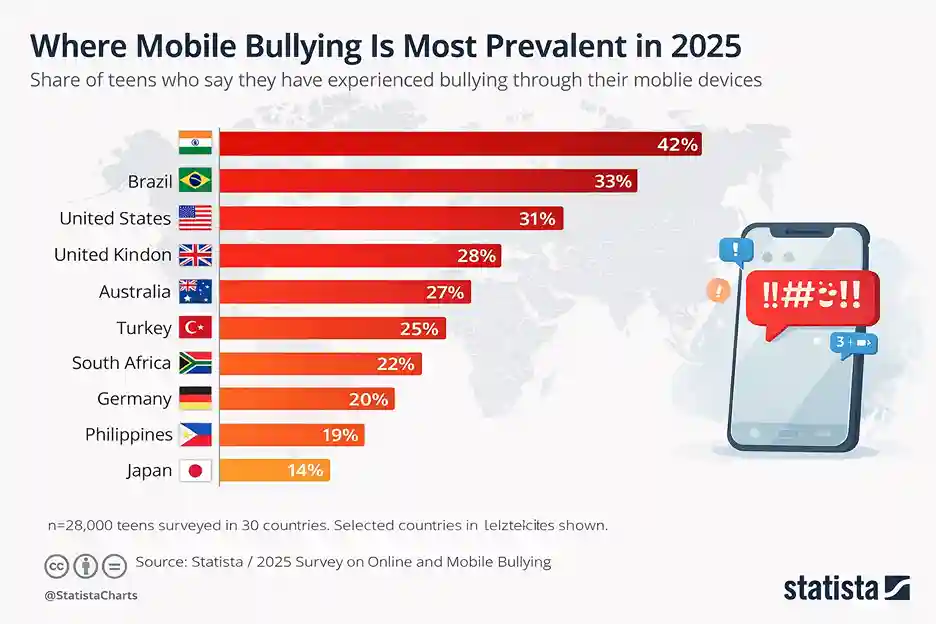
In comparison to the rapid increase of industrialization and urbanization, the dependency on electronic devices like cell phones, tablets, androids, laptop, computers, etc are gradually increasing.
Mobile bullying or cyberbullying is an adverse product of digital applications. In essence, cyberbullying is now a burning issue today. Millions of people are affecting through mobile bullying. Sometimes this issue is addressed as electronic bullying. The severity of the effect depends on location variation, demographic situation, lack of awareness. The occurrence of cyberbullying is not confined to young or adult but child also victim in this issue.
In this section, we are trying to discuss cyberbullying. Now we flashback on the prevalence of mobile bullying in the global scenario in a tabular form along with proper resources.
| Region / Group | Estimated Prevalence (%) | Notes / Source |
| Worldwide Teens (12–17) | 22% | Global internet users ages 12–17 report cyberbullying experience |
| U.S. Teens Lifetime | 58% | Reported lifetime experience; includes mobile use and texts |
| U.S. Teens Last 30 Days | 33% | Cyberbullying experienced in past month |
| Adolescents with any online harassment | 46% | U.S. teens reporting at least one cyberbullying behavior. |
| (Example high) — Girls ages 13–17 | 71% | On social media platforms (2025 survey). |
| (Example lower) — Tweens 9–12 | 29% | Teen cyberbullying rates vary by age subgroup |
| Australia Young People | 44% | Report negative online experiences involving harm/threats |
| Past-30-Day U.S. Cyberbullying | 26–33% | According to multiple sources. |
In the year 2021, a report of the FBI (Federal Bureau of Investigation) had explored that, in 2020, there were 781,790 complaints registered for ground or internet crime. In this regard, there is a $4.2 billion financial loss that has been incurred. If we compare it, in comparison with 2019, then it will increase 69.0%.
According to the IPO report, the highest number of registered cases is found in the child cyberbullying issue in India. In the report it has been revealed that the unnatural enhancement in this country is only due to a lack of regulatory laws, which exacerbates the problem.
According to a McAfee Intel survey, in India over 70.0% of adolescents spend 5 hours on average on the internet weekly. Among them, 27% of children used smartphones.
Cyberbullying in India has increased rapidly due to increased access to technology and social media, as well as a lack of awareness and insufficient preventive measures.
As far as registered cybercriminal records are concerned, India has the highest rate of cyberbullying incidents. There are over of 85% children reporting it.
A report revealed that mobile bullying occurs more than once for many victims.
In India, 46% of children reported that it happened by a stranger, compared to 17% globally, while 48% reported that it was perpetrated by someone they knew, compared to 21% of children in other nations.
Common forms of mobile bullying include spreading false rumours (39%), being excluded from chats or groups (35%), and name-calling (34%).
In accordance with the report of prevalence from the Centres for Disease Control and Prevention (CDC), any adult individual spends their time around 3 hr 15 min on a daily basis. On the other hand, adolescents (11-14) have a total screen time of 6 hr in a day, and the age group (15-18) spends 7.5 hr in a day.
The above statistical explanation expresses itself in what the situation is and where we are going day by day, and the time has come to think it out seriously regarding dependency on digitalisation and mobile bullying.
Understanding of Mobile Bullying
Mobile bullying refers to actions such as making threats, spreading rumours, attacking someone physically or verbally, and excluding someone from a group. Bullying typically occurs through the following platforms:
- Text messages
- Social media apps
- Instant messaging platforms
- Photo or video sharing apps.
Types of Mobile Bullying or Cyberbullying

Without discrimination of gender, any age group – adult, adolescent or kid – may be attacked by bullying. The type of bullying is different according to the situation, age or other perspective. Now we are describing the different types of bullying in detail.
Generally bullying is of five (05) types, and every pattern has been described below one by one.
Physical Bullying
When a person is physically victimised by bullying, then it is called physical bullying. Generally physical bullying occurred through punching, kicking, pushing, tripping, pinching, or any property damage. Physical abuse brings long-term and immediate consequences.
Verbal Bullying
Verbal bullying can be defined as when a person is called by his name, any insult, taunting, racist attitude, intimidation, homophobic comments of a sexual matter, or use of abusive language; then it is called verbal bullying. Initially it seems like not any serious problem, but when it crosses its limitation, it can bring any severe consequence.
Relational Bullying
Most of the time it occurred behind the victim’s backside. So it is sometimes called covert bullying. So it is more difficult to spot. The key intention is to make the target feel ashamed or embarrassed in front of the public.
Causes are included for social bullying:
- Occurred through lie talk and rumour spreading.
- Threatening someone or using dismissive body language or expression.
- Using cruel pranks
- Imitating the victim in a mocking way
- Become proactive to encourage others for social isolation.
- Creating negative public opinion of someone
Cyberbullying or mobile bullying
Cyberbullying basically occurred through the use of any digital device like a cell phone, computer, laptop, or other electronic device. SMS texting, websites, instant messaging, social networking sites, gaming sites, and other online platforms are the most used means of bullying.
Social isolation
Cyberbullying creates social isolation by making victims withdraw from society, from friend circles and ultimately from family. Mobile bullying promotes severe loneliness, fear and distrust. All things lead to feelings of being trapped, disconnected, and unsafe in both digital and real-world spaces. These withdrawal symptoms are manifested by avoiding social media use, irregular school life, and unnatural quietness. All of them create an impact on mental health, like severe mental anxiety, depression and low self-esteem.
Key factors are responsible for isolation:
1) Fear and Distrust
2) Avoiding behaviours
3) Exclusion
4) Emotional distress
5) Communication breakdown
Why Mobile Bullying Is More Harmful Than Traditional Bullying
- Making bullying the normal attitude among the student community, particularly in the adolescent stage, currently increases it very significantly. Many experts express their opinions that the occurrence of mobile bullying or cyberbullying is far different from any traditional bullying. Why is that?
- Targets may not know who is doing it.
- Most of the time unknown
- There is trauma that always acts on the mind; hurtful actions can go viral and include a larger audience.
- The bullying is experienced in a very public way.
- Most mobile bullying takes place without adults seeing it.
- 24/7 accessible.
Signs of Cyberbullying
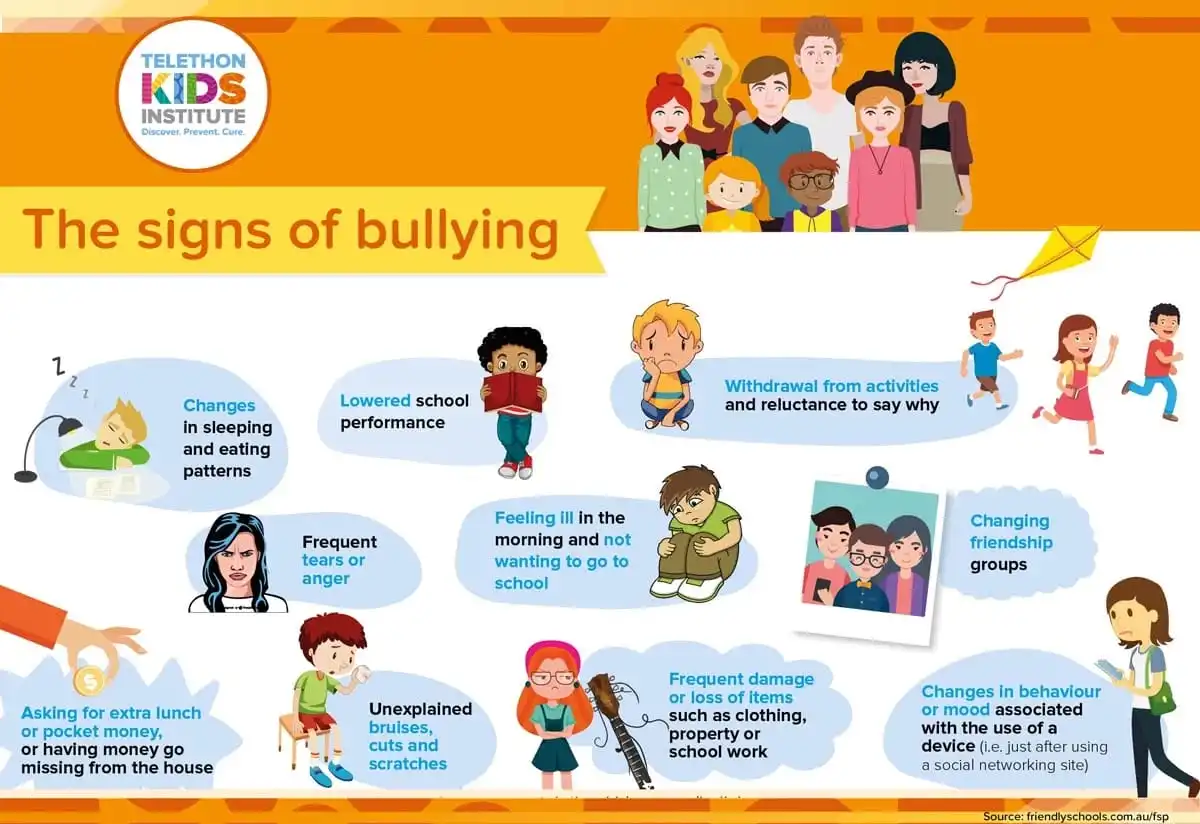
As far as cyberbullying is concerned, most of the time it remains undetected. So how do you know if your child is being bullied? In this situation most of the time, children would not admit to their victim by mobile bullying. Your proactive observation needs to keep your child safe from bullies. Below we are describing some warning signs by which you can apparently observe your child for the victim of cyberbullying.
- Being distressed after using the internet or a mobile phone.
- Frequent withdrawal attitude, becoming more anxious in any matter, changing personality, unnatural sadness and anger without any reason.
- Appearing more lonely or distressed
- Unexpected changes in friendship or peer groups
- A decline in academic performance
- Changed sleep patterns
- Avoiding school or clubs
- A decline in physical wellness
- Secretive about online activities and mobile phone use. Seeking more privacy in online activities or on mobile phones.
- Recurring health problems and loss of appetite.
- Losing interest in doing any activities
Practise online safety.
The following tips or recommendations can help you to practise online communication safely and create a safe distance from mobile bullying.
· Keep any passwords and IDs in your own custody, even from your close friends.
· Educate about privacy settings on different social media platforms and the process of reporting to the concerned authority on different social media platforms.
· Be careful about what you wish to post, text, or share online.
· The number of unsafe people should be clocked.
Please remember the process of blocking a system is not the same on every platform, so before blocking anybody’s number, learn more about the blocking system on the particular device and specific platform.
Tips to report cyberbullying
Most of the time cyberbullying deserves a belief that they are sending text, video or a message; people often consider it as funny or approved behaviour. You may share your feelings or expression towards the bullies about their happenings, as it is not okay; they might be motivated to stop these types of activities.
If you feel that it is safe for you, then you can communicate with bullies in person through direct message for addressing this problem. You can let them know why you’re upset by their behaviour and hurting. Request bullies to stop these types of activities. This is a very linear approach to protecting against mobile bullying. If the content (photo/video) exists in any social media, then you can report to the concerned authority for its inappropriateness and remove it from this platform. You can visit the website if you need
Laws and Sanctions
Every state has their own judicial system or particular laws that can respond to mobile bullying. Then, gradually, with the enhancement of the use of technology, many states have included the incidents of cyberbullying in this jurisdiction or governed by law.
Apart from constitutional laws, every school has its autonomous policy to prevent the incident of bullying or take authorised action. Some states also have provisions to address bullying if it affects school performance.
Know about what the law says against such offences.
Cyberbullying is a punishable offence and attracts sections 66E & 67 and 67A under the I.T. Amendment Act 2008 and section 507 under the IPC. It may also attract S.499 IPC for defamation in case the perpetrator shares defamatory content publicly in the way of bullying.
Special Concerns
Through the rapid expansion of social media and digital forums, the prevalence of sharing of comments, photos, videos or text is viewed by strangers as well as closely related people.
This public record can be thought of as an online reputation, which may be accessible to schools, employers, colleges, clubs, and others who may be researching an individual now or in the future.
Cyberbullying can harm the online reputations of everyone involved – not just the person being bullied, but also those doing the bullying or participating in it. Mobile bullying has unique concerns in that it can be:
Persistent – Digital devices have the ability to communicate immediately or continuously 24 hours a day. So bullies got this opportunity to make this incident (cyberbullying) uninterrupted. So it is difficult to get relief from mobile bullying.
Permanent – Most information communicated electronically is permanent and public if not reported and removed. A negative online reputation, including for those who bully, can impact college admissions, employment, and other areas of life.
In digital platforms most of the information of shared content is electronically saved permanently and open to the public. Until it is not reported to remove or deleted. A negative online reputation can impact college admissions, employment, and other areas of life.
Hard to Notice – Because teachers and parents may not overhear or see mobile bullying taking place, it is harder to recognise.
How to Respond to Digital Bullying
The approach of reaction depends on basically two aspects: one is the severity of the incidence, and the other is the type of bullying going on. You can take preventive measures to stop the bullying by following this way: blocking the number forever or becoming more aggressive to take action for the abuse.
As a whole, it will be your best approach for its navigation to speak with any counsellor for addressing the situation and finding the way out for coming out of the emotional struggle. As a parent, you can enrol the name of your child or adolescent in a mobile bullying counselling session. Counsellors can facilitate them to overcome this situation. Here you will get different types of mental therapy under professional guidance.
Effects of Mobile Bullying
In this context we are trying to discuss the effect of mobile bullying on the long-term consequences of human health, keeping the different aspects in mind.
Depression: Through the occurrence of cyberbullying, adolescents experience feelings of sadness, hopelessness and loss of interest in any activities they once enjoyed.
Generally depression is manifested through different warning signs, including sleep disturbance, gastrointestinal refluxation (especially change of appetite), emotional disturbance and even thoughts of suicide.
Anxiety:. Basically, two things are likely going on one is the repetitive receiving of harmful messages from bullies, and the other is the sharing of personal information in a friendly circle. Both of them can lead to enhancing the level of anxiety. Anxiety is the alarming sign of mobile bullying
It is normal for a bullied student to lose their interest in participating in school curriculum activities or sports and field trips.
Low self-esteem: Constant negative messages induced to break down the adolescent’s self-image and confidence.
Self-Isolation: Becoming self-isolated is a very remarkable symptom of mobile bullying. A bullied adolescent often feels they are bad themselves in nature. So they try to isolate themselves from friends, their peers, and family members. Most of the time they spend their valuable period in a closed door, and gradually they become school dropouts.
Suicidal thoughts: Suicide is the extreme consequence of mobile bullying. In severe cases, the emotional distress caused by mobile bullying can promote suicidal thoughts.
Decreased concentration: Preoccupation with mobile bullying incidents fosters making it difficult to focus on school activities.
Lower grades: A decrease of concentration in the academy leads to the occurrence of the linear consequence of a slowdown of academic performance.
School avoidance: Fear of facing bullies or associated embarrassment may lead to skipping school or dropping out.
Social and Behavioural Changes
Social isolation: Bullied persons generally cover themselves up for further embarrassment or bullying in society. So victims of mobile bullying may withdraw from friends and other social activities.
Trust issues: A mobile-bullied person is suffering from confusion about making new trusted relationships, even in a non-digital context.
Aggressive behavior: Some victims may become bullies themselves as a coping mechanism or form of recrimnation.
Physical Health
Sleep disturbances: Like mental health, mobile bullying also affects physical health, particularly sleep disturbances. Anxiety and uncontrolled increasing of screening time promote the creation of different sleep disorders like insomnia (difficulty falling asleep), sleeplessness (inability to sleep), fatigue, somnolence (drowsiness), and hypersomnia (excessive daytime sleepiness).
Psychosomatic symptoms: Stress developed by bullying creates some psychosomatic disorders like headaches, stomachaches, and other physical ailments.
Eating disorders: Some adolescents may experience unhealthy eating habits due to emotional distress as consequence of mobile bullying .
Long-term Consequences
Persistent mental health issues: The effects of bullying can extend into adulthood, leading to chronic depression or anxiety.
Substance abuse: Some victims may turn to drugs or alcohol as a coping mechanism.
Difficulty in future relationships: Trust issues and low self-esteem can impact personal and professional relationships later in life.
Retardation of cognition: Pre-teens are at higher risk for socio-emotional disorders because they are at a developmental stage where they are less prepared cognitively, behaviorally, and neurobiologically. – Dr. Centofani
Effect on national economy: Considering all the parameters of cyberbullying at the adolescent stage, it may create an enormous impact on our national economy because this phase is the future driving force of the productive phase of the national economy
How To Prevent Mobile Bullying And Cyber Bullying
If you notice your child or your close someone was victim through cyberbullying , here some tips for your help for reducing this incidence or possible to eliminate this . Here we are describing some ways or approach for coming out from this problem or use for prevention of cyberbullying.
- Block the bully’s phone number. Fist and most effective approach for escaping from cyberbullying by blocking the phone number bully’s . Then just avoiding from getting any massage , text, voice massage, voicemail etc.
- Keep your number private. Sahiar you phone number only among your trusted known area.
- Block email addresses and social network accounts. Reduce and avoid for harassment of digital bullying you may block email address and social networking. Only share these connection among our trusted friend circle.
- Use identifying ring tones. This can be done through special setting ring tone for the people you wants to talk.
- Tell someone you trust. Let other people know about the bullying that’s going on so you can build a support system for yourself or your loved one.
Tips and guidelines
- Some wiget like Parental Control Bars, Desktop Firewalls, Browser Filters of the coputer used for avoiding for cyber bullying.
- Make sure use of internet safety about educational curriculum cavities of your children’s school
- You may request to school authority for educate about how to prevent and respond to online peer harassment ( cyberbullying ) , health handling of social media site or network .
- Establish the rules of computer Labs, Internet labs.
- Specify clear rules, Guidelines and policies regarding the use of the Internet, Computers and Other Devices such as USB, CDROM at School for Cyber Bullying.
- Educate the students about cyberbullyinng occurrence and its prevention .
- Teach students that any type of cyberbullying is unacceptable and this type of occurrence must be treated as a punishable offence.
- Establish a set of rule for proper monitoring to students in school.
- Teachers need to mentor or establishment mentorship with senior students to guide information security awareness and monitoring through peer students
How Parents and Guardians Can Help
- If your child is bullied through mobile or any cyber way, you should help your child by following this manner:
- First of all, speak up about it and advocate for yourself.
- Victimized, signs and symptoms of your teen express themselves.
- Encouraging your teen for open communication
- Applying self-developed control and monitoring tools.
- Seeking school official or legal support when involved.
- Realize that it is not your fault, and you are not alone.
- Not stay in silence; must tell somebody—an adult or friend—or report to OK2SAY.
- Do not respond or retaliate.
- Block the person who is cyberbullying.
- Save the evidence properly by keeping copies or screenshots, including dates and times.
If you are a target of harassment, threats, and other forms of misuse, report the abuse to the concerned authority.
Prevention and Intervention
To mitigate the effects of mobile bullying on adolescents, a multi-faceted approach is necessary:
- Education: Teach adolescents about responsible digital citizenship and the consequences of cyberbullying.
- Parental involvement: Encourage open communication between parents and children about online activities.
- School policies: Implement and enforce clear anti-bullying policies that include mobile and online behavior.
- Technological solutions: Use of parental controls and monitoring apps to help prevent or detect bullying incidents.
- Support systems: Provide access to counseling and support services from government-run AFHC centers available in block hospitals in our country for victims of mobile bullying.
By understanding the serious effects of mobile bullying on adolescents, we can work towards creating a safer digital environment for young people and provide the necessary support to those affected by this modern form of harassment.
FAQ Section on Mobile Bullying
What is the definition of bullying
Generally bullying means repeated and aggressive behaviour aiming to cause harm or intimidate someone. It may happen through physical, verbal, social or online means; that is called cyberbullying. Literally, in the year of 2011, Rigby & Smith have given the definition of bullying as involving repeated aggressive behaviour directed towards someone with less power, with the intention of causing them harm.
This definition does not cover all the aspects of bullying. Then in 2013, Olweus defines bullying as an unprovoked form of aggressive peer-to-peer behaviour with three characteristics that make it different from other peer interactions: (a) negative actions, either verbal or physical, directed toward the victim with the aim of hurting them; (b) an imbalance of power or an asymmetrical power relationship favouring the bully and rendering the victim incapable of defending himself or herself; and (c) negative actions being repeated over time.
After that there are so many eminent psychologists trying to give the definition regarding bullying, like Cowie, Cossin, de Bettencourt and Lemme (2006), Smith & Levan (1995), Smith and Monks (2008), Shapka, Hymel, Olson, & Waterhouse (2012) and lastly Maunder in 2019.
Key features of bullying –
Power imbalance, repetition, intent to harm,
Common form of bullying
Verbal, physical, social/relational, and cyberbullying.
Prime target of the bullying
Anybody can be targeted by bullying, but especially the person with disabilities, who is socially shy, particularly in the age group of adolescents.
How to stop internet bullying?
In respect of bullying, internet bullying is also cyberbullying. It may happen with any age group of people, but it is preventable. To prevent it, you may follow the immediate action taken and long-term preventative intervention.
Immediate Actions (If You Are Being Bullied)
Do Not Engage: Do not respond immediately or retaliate; never forward bullying messages. Often it may happen worse.
Block the Bully: Cut off communication by blocking their phone number, username, and e-mail address.
Save Evidence: Keep evidence properly, like screenshots, saved messages, and the date & time of happening.
Tell a Trusted Adult: Seek help from parents, teachers, counsellors and any trusted adult by sharing information about bullying. It is not just about tatting but also about getting help.
Report Online: Inform online platforms like Instagram and TikTok about the abusive content.
Prevention Strategies (Long-Term Intervention Strategies)
Privacy Settings: Keep the privacy of your social media accounts and limit who can access your information or post.
Think Before Posting: Be careful to create any content or any post in respect of real-world consequences.
Protect Personal Info: Keep your personal information, like your phone number, email address or user ID and password for any online tutorial, very carefully for Bystanders (If You See Someone Being Bullied).
Speak Up (Safely): . If you feel the situation is normal, then tell the bullies to stop; otherwise, support the victim secretly.
Don’t Participate: Abstinence from responding to comments and sharing negative posts about others
Be an Ally
Long-Term Solutions
Educate: Learn about cyberbullying and raise awareness.
Limit Screen Time: Confine yourself to your screen time; sometimes take a break and go offline.
Seek Professional Help: Talk to a mental health professional if the bullying is severe. If the condition is very severe, then seek any mental health professional.
What are 7 types of cyberbullying?
Seven common distinct types of cyberbullying include –
Harassment: This type of bullying happened through sending messages, texts, content or any picture or illustration which is very offensive, threatening and abusive.
Impersonation (or Masquerading): This type of bullying generally occurred by any victim creating any fake accounts for posting any harmful content or hacking the account.
Exclusion: This occurs by leaving anybody from the online groups, chats or games.
Denigration/Flaming: This process of bullying is generally used for damaging someone’s reputation by spreading lies, rumours and posting insulting matters.
Doxing: This generally occurs through publishing any personal information, like name, phone number, or address, without having any consent of this particular person.
Cyberstalking: When any person tries to communicate with others relentlessly, monitoring, intimating or threatening someone electronically.
Trickery/Outing: When anybody gains someone’s personal secret information by making
Trust and sharing of all of them publicly for embarrassing or shaming them
How do I deal with mobile bullying/harassment from an anonymous caller?
Bullying or harassment from an anonymous mobile caller has to be dealt with through immediate and decisive action for your safety and well-being. To manage the situation, do not
Engage with answering, arguing, or returning the call. This type of call is generally seeking a reaction. More priority should be given to your own instincts. Unlike this, some key steps for dealing with the situation are
1) Documenting the calls (keep a log,save voicemails and messages, note details),
2) Block and Filter Calls (Use your phone’s blocking features, contact your service provider, and utilise third-party apps.)
3) Report the Harassment (Contact your phone carrier, report to law enforcement, and file a complaint with the FCC/FTC).
4) Seek Support (Talk to a trusted person, connect with support organisations)
I’m experiencing cyberbullying, but I’m afraid to talk to my parents about it. How can I approach them?
If you are experiencing cyberbullying, it will be your first and most effective health approach to deal with the situation to talk to a trusted adult clearly.
It is a very common scenario that everyone does not open up towards their parents to talk about something; sometimes they feel hesitant to address their problem. But you can do something to make it easy to communicate with your parents.
Choose the time for talking when they pay full attention to your addressed problem. Try to explain where you are gaining pain from this crisis. Always remember that your parents might not be as knowledgeable about modern technology as you are. So you might need to help them to understand what’s happening.
They might not have any answer immediately for you, but they always try to help to find out any solution or way of escaping this crisis, and together they can find any solutions. Two heads are always better than one! , If you still remain unable to know what to do now, then you can reach out to another trusted person.
What are the effects of cyberbullying?
When bullying occurs online, it can feel as if you are being attacked from every corner of your surroundings. Even if it may feel like you are in your own home and feel like there is no way to escape from this situation. This situation can bring along a long-time effect on this person in many ways, including:
Mentally: Feeling upset, embarrassed, stupid, or even afraid or angry.
Emotionally: Feeling ashamed or losing interest in love.
Physically: Gaining experience of tiredness in the form of loss of sleep, stomach ache, and headaches.
The feeling of being laughed at or harassed by others can prevent people from speaking up or trying to deal with the problem. In extreme cases, cyberbullying can even lead to people taking their own lives.
Being bullied or harassed by someone prevents opening up to another person for sharing his problem or crisis. In an extreme situation, the cyberbullying fosters suicide.
Cyberbullying can affect us in many ways. But these can be overcome, and people can regain their confidence and health.
Does banning mobile phones at school decrease bullying?
Yes, banning mobile phones in schools can decrease bullying, with studies showing significant, though often modest, reductions in bullying incidents, especially cyberbullying, by limiting opportunities for online harassment and reducing the escalation of offline conflicts. This is a very effective and results-orientated and evidence-based approach for decreasing the cyberbullying in school time. A comprehensive study has explored that a recommendation that bans mobile use often modestly reduces the bullying incidents in school. This approach is effective but not unique. However, it is still happening in offline or online mode. So reducing it to a remarkable level requires an anti-bullying strategy in broader aspects. For a better outcome, priority should be given to media literacy training and policies together. Some evidential parameters describe how to reduce cyberbullying that are included:
Reduced Cyberbullying – Most of the principals have reported that banning mobile phones reduces the incidence of cyberbullying and harassment.
Less Offline Escalation – Increase the face-to-face communication ability, direct conflict resolution, and reduction of aggressiveness.
Empirical Studies – A study has shown a significant decrease in the incidence of cyberbullying in Spain and Norway due to the ban on mobiles in school.
In accordance with the BBC article and the Harvard Graduate of Education piece, it has been concluded that the banning of mobiles in school promotes the removal of cyberbullying, but in the meantime, it acts as a key mechanism for digital well-being and social-emotional learning.
What are the best anti-bullying apps for social media and mobile devices?
There are a number of mobile apps available in the market for reducing the incidence of cyberbullying in the community, including in schools. As per the functional level of concern of those apps, we may categorise on an individual basis the most applicable apps like RE Think (prevention and reporting), Keyboard (detects and pauses hurtful messages) and STOPit (anonymous reporting for schools).
At the parental level, most used apps like FamiSafe, Net Nanny, and Qustodio are basically used for monitoring and filtering content. Zigazoo is used at the community level. Olweus is an anti-bullying programme. Unlike these, there are several social media platforms like Zigazoo that are exclusively applicable for kids. Through this platform a video has been shared for the kids in safe, educational and fun-minded acts as alternatives to TikTok.
What can be done to prevent cyberbullying of children through mobile phones?
For prevention of cyberbullying among the children, it should be done at different levels, and every level has different significant contributions and boundaries. We are now describing one by one every level in the below-
For Children (Empowerment & Action)
Don’t Engage: Never respond to bullies.
Block & Unfriend: Block the contact number and cut off the friendship.
Adjust Privacy: A private setting has to be fixed in your profile where only your trusted people can access your text or posting.
Save Evidence: Take screenshots of bullying messages or posts and keep them very carefully.
Report: Report to the used platform and talk about it with your trusted people.
Keep Personal Info Private: Don’t share addresses, phone numbers, or school names.
For Parents (Prevention & Support)
Open Communication: Communicate openly with your kids about online life or virtual feelings and potential dangers.
Set Rules & Limits: Establish clear guidelines for screen time, using of apps, and type or quality of content.
Use Parental Controls: Utilise settings on devices, apps, and broadband.
Monitor & Engage: Regular monitoring of your kid’s activities, particularly in the digital world, and try to understand the intent of the sites they use.
Educate: Teach digital citizenship, the permanence of online posts, and how to handle “haters”.
· Watch for Signs: Be alert to behavioural changes that might signal a problem (secretiveness, defensiveness). Alarming signs like secretiveness and defensiveness are alerts to behavioural changes in your kids.
Promote Resilience: Teach kids to bounce back from adversity.
Key Actions (Parents & Children)
Report to Platforms: Report to platforms like TikTok, Instagram, etc. to remove harmful content.
Involve Schools: Report serious incidents to school authorities immediately without fail.
Contact Authorities: For threats or criminal activity, involve law enforcement at your earliest.
What if the bully is persistent?
If a bully is persistent, you must escalate your response: stay calm, refuse to give a reaction, document everything (dates, details) for proof, tell trusted adults (parents, teachers, counsellors), build a support network, avoid being alone, and if necessary, involve authorities as it becomes a serious safety issue, remembering that your health and safety are the priority.
Prevent the persisting bullying; you may follow a simple equation that you escalate your response in cooperation to persistence. These are followed in different dimensions that are described below:
Strategies to Use
Stay Calm & Confident: Give a response in an assertive way, keep good posture, and avoid showing fear or anger, because bullies are strongly focused on feeding on reactions.
Walk Away/Ignore: When safe, disengage. This denies them the attention they crave.
Use Assertive Language: Calmly say, “Stop it,” or “I’m not interested in this,” or calmly ask, “How is that funny?” to highlight the inappropriateness.
Document Everything: Keep a detailed log (journal) of incidents; this is crucial evidence if you need to report them to the concerned authority.
Escalating the Response
Tell Trusted Adults: Inform about the incidents to the nearest trusted people, school counsellor, teachers, and parents. According to the situation, they can start intervening in an official manner where this bullying has occurred.
Build a Support System: Connect with true friends and friend groups where you can get support and stand with you for navigating the situation.
Strengthen Yourself: Enhance your self-esteem power, and to find a new friend, you should engage yourself in different good activities. Seeking help from any mental health professional for mental health wellbeing.
Involve Authorities: If the bullying reached into threatening, property damage or physical harm, then report to your parents for taking lawful action through involving the police by producing proper evidence.
Conclusion
Summarily, the research study had recommended that mobile bullying victimisation and crime both create a remarkable effectual impact on teens’ health. In fact, it is not just any individual health problem but also an emerging global public health concern now, manifesting in adolescents in the form of depression, anxiety, low self-esteem, emotional distress, substance abuse, early sexual experience, and suicidal attitude.
Considering all relevant aspects of the study, it is clear that adolescents victimised with mobile bullying require support physically and mentally, but the problem is they are not ready to seek help from adults or explore their problems with any adult.
Assessing the adolescent’s physical and psychological health problem through educators, healthcare providers, or counsellors, which is directly linked with cyberbullying or mobile bullying, should be clear about this issue. So, a proactive approach should be taken in converging mood comprising multi-professional personalities like educators, behavioural health science professionals, and medical professionals.
Prevention and intervention for mobile bullying or cyberbullying in adolescents should include introducing a comprehensive school-based curriculum in school, which is needed very urgently.
Education about cyberbullying could be integrated into school curriculums and the community at large, for example, by engaging adolescents in scholarly debates and community discussions related to cyberbullying legislation, accountability, and character.
Apart from the community, we have a significant responsibility to reduce this victimisation of cyberbullying among the adolescents through organising awareness programmes consistently, like debates and discussions, site and drawing competitions, and open lecture delivery.
Disclaimer:
This content is for information purposes only and is not a substitute for professional medical advice. The data used in this content are derived from primary sources (different electronic media) and secondary sources (books and published journals). This content has no intention to mislead any steps of treatment guidance or programme implementation towards the parents and adolescents.
Reference:
Cyberbullying : what is it and how to stop it from UNICEF
What Is Cyberbullying from stop bullying.Gov
A Framework for Developing Awareness Interventions: A Case of Mobile Bullying From NIH










3 thoughts on “Mobile Bullying Exposed: Protect Your Child Today”