
Explore vital support services for teenage mothers. Access care, guidance, healthcare, education, and hope to build a better future. Learn more now!
Author Description
Written by Sajal Samanta
Sajal Samanta is an Anthropologist specializing in Adolescent Health, with extensive experience in studying the social, cultural, nutritional, and psychological dimensions of teenage pregnancy and motherhood. His work focuses on vulnerable adolescent populations, maternal health behavior, breastfeeding practices, reproductive health education, and the role of community-based support systems in improving maternal and child outcomes.
With a strong background in public health communication, Sajal Samanta contributes evidence-based, culturally sensitive health content aimed at empowering teenage mothers, caregivers, educators, and community health workers. His writing emphasizes preventive care, informed decision-making, and holistic support for adolescent mothers within healthcare and social welfare frameworks.
Peer Reviewed By
Medically Reviewed by Dr. Krishanadu Mondal, MD
Dr. Krishanadu Mondal is a Medical Doctor (MD) specializing in Pediatrics and Adolescent Health, with clinical expertise in maternal-child health, neonatal care, adolescent nutrition, breastfeeding counseling, and preventive healthcare services.
Dr. Mondal has carefully reviewed this article to ensure medical accuracy, alignment with national and international adolescent health guidelines, and relevance to real-world clinical and community health practices. The peer review process focused on pregnancy complications in adolescents, breastfeeding recommendations, contraceptive counseling, mental health considerations, and child development support for teenage mothers.

Medical Disclaimer:
The information provided in this article on Teenage Mother Support Services: Care, Help & Hope is intended for educational and informational purposes only. It is not a substitute for professional medical advice, diagnosis, or treatment.
While every effort has been made to ensure that the content is accurate, up-to-date, and evidence-based, adolescent pregnancy and motherhood involve complex medical, psychological, and social factors that vary from individual to individual. Teenage mothers are strongly advised to consult qualified healthcare professionals, including doctors, nurses, midwives, and counselors, for personalized medical care, nutritional guidance, mental health support, breastfeeding counseling, and contraceptive advice. Healthroo.com does not assume responsibility for any outcomes resulting from the use of information provided in this article. Never ignore or delay seeking professional medical advice because of something you have read here.
The issue of teenage mothers is now very vulnerable worldwide; we are already aware. From financial struggles to emotional stress and lack of guidance, teenage mothers need access to various support services to help them navigate parenthood successfully.
This article explores different types of support services available to teenage mothers and how these services can positively impact their lives.
The Challenges Faced by Teenage Mothers
Teenage mothers often experience difficulties that affect their education, career prospects, and overall quality of life. Some of the common challenges include:
- Educational Disruptions – Many teenage mothers drop out of school due to pregnancy and the responsibilities of raising a child.
- Financial Struggles – Young mothers often lack financial stability, making it difficult to provide for their children.
- Limited Emotional Support – Some teenage mothers face rejection from family and friends, leading to feelings of isolation.
- Health Risks – Teenage pregnancies can lead to complications, affecting both the mother and the baby’s health.
- Lack of Parenting Skills – Young mothers may not have adequate knowledge about child-rearing, leading to stress and anxiety
Fortunately, several support services are available to help teenage mothers overcome these challenges and build a better future for themselves and their children.
Complications during pregnancy, childbirth, & postnatal period:
- Antenatal period: Pregnancy induced hypertension, Anaemia: Iron and folic acid deficiency (nutritional/ parasitic infestation, malaria), STIs including HIV infection (biological and social vulnerability, MTCT), malaria and its complications
- Labour and delivery: Preterm delivery, obstructed labour leading to genitourinary fistulae
- Postnatal period: Anaemia, pre-eclampsia, postpartum depression, repeated pregnancy
- For the infant: Low birth weight, perinatal morbidity and mortality, inadequate breastfeeding
Needed Supportive Service for Teenage Mother
Care during pregnancy, childbirth & postnatal periods:
- Early diagnosis of pregnancy
- Comprehensive antenatal care, effective care during delivery, and postnatal care are essential.
- Inability to remember dates of the menstrual cycle, irregular cycles, or a desire to hide the pregnancy may delay early identification of pregnancies.
- The occurrence of missed periods, nausea, or vomiting should immediately lead to testing for pregnancy.
- At least four antenatal care checkups must be completed.
- The iron folic acid tablets should be consumed as directed.
- Critical issues like nutritional requirements, rest and care, danger signs of pregnancy, voluntary testing for STIs and HIV, and caring for the newborn must be covered in counselling.
- The labour and delivery periods must be monitored by trained medical personnel who also ensure prompt responses to any complications.
- In the postnatal period, the mother must be advised about breastfeeding and taking care of the child as well as maternal nutrition and contraceptives.
General dietary advice for pregnant women:

- Eat a balanced diet so that all nutritional needs are fulfilled
- Eat four to five times a day. Consume meat, fish, and eggs, if culturally accepted and affordable
- Increase intake of cereals, pulses, milk and milk products, fresh fruits, and green leafy vegetables
- Include oil or ghee in the diet, as these are rich sources of energy
- Consume iodized salt
- Drink plenty of water
- Eat small amounts of food at short intervals if suffering from nausea and vomiting but should not stop eating
- Intake of tobacco and alcohol should be prohibited
- Consume ‘Supplementary Food’ provided at AWC daily
- Avoid food fads and disbeliefs regarding food intake
- In addition to a normal diet, eat one additional good-quality meal every day.
- Eat more of whole grain cereals, pulses/dals, milk, curd, and green leafy vegetables to meet the need of greater protein intake for milk production
- Consume iodized salt
- Drink plenty of water
- Do not eat spicy and high-calorie food such as ghee, nuts, etc. in excessive amounts to avoid undesirable weight gain
- Eat all food items; no food is forbidden during lactation
- Consume ‘Supplementary Food’ provided at AWC daily for six months after delivery to meet the increased nutritional requirements
Knowledge Imparting on Breastfeeding :
- Breastmilkis the first natural food for a child and it provides all the energy and nutrients that he/she needs for the first six months oflife.
- It provides half or more of a child’s nutritional needs during the second half of the first year and up to one-third during the second year of life.
- For the first six months, no supplementation is needed, not even water.
- National guidelines recommend that all children be breastfed exclusively for the first six months of life.
- Exclusive breastfeeding for six months reduces gastrointestinal infection and ensures proper growth
Advantages of breastfeeding: For the mother:
- Reduces the risk of excessive bleeding after delivery
- Makes her feel emotionally satisfied, and her self-image is enhanced
- Protects from breast and ovarian cancers and delays the onset ofthe menstrual cycle
- Easy to digest.
- Contains substances which protect from diarrhoea, respiratory infections etc.
- Suckling helps in the development of jaws and teeth
- Early skin-to-skin contact with the mother provides warmth
- Helps mother and child to develop a close and loving relationship.
- Breast milk is readily available, safe, at right temperature and free of cost.
Techniques of breastfeeding
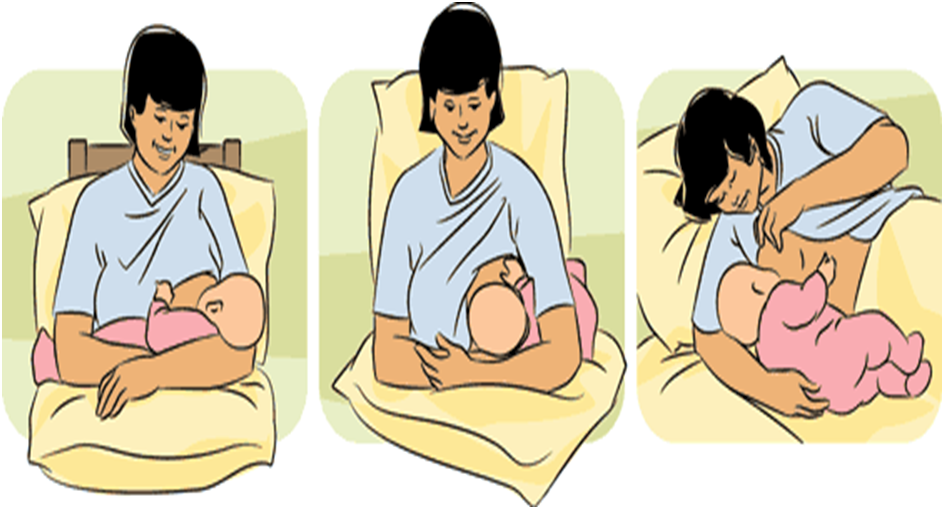
Front hold/cradle position, Underarm position, Lying down position
Attachment signs to the breast:
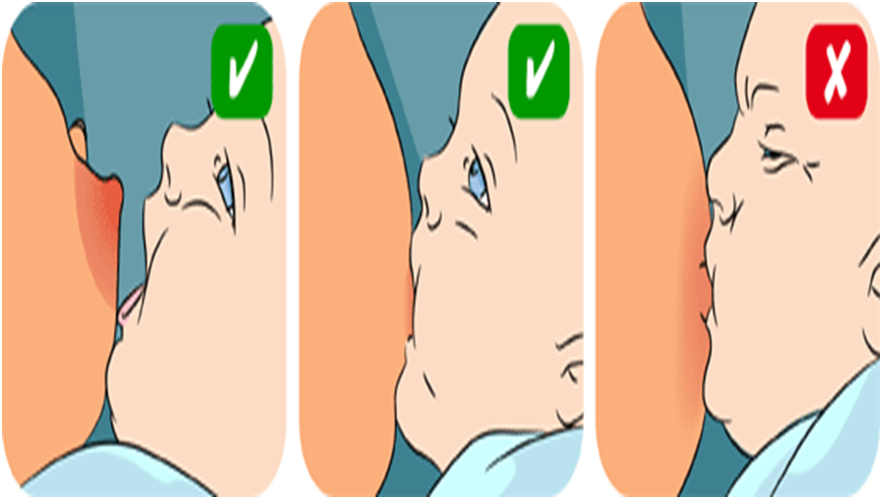
| More areola is visible below the mouth and lower lip | Signs of good attachment | Signs of poor attachment |
| Chin | Touching breast | Separated from the breast |
| Mouth | Wide open | Looks closed |
| Lower lip | Turned outward | Pointed forward |
| Areola | More areola visible above than below the mouth | More areola visible below the mouth and lower lip |
| Pain during nursing | Absent | More areola is visible above than below the mouth |
Frequency of feeding:
- A newborn baby should be fed as often as every two hours or perhaps more frequently in the beginning.
- The mother should try nursing 10 to 15 minutes on each breast alternatively.
- By 2 to 3 months of age, an infant needs to be breastfed for six to eight times a day.
- Both underfeeding and overfeeding should be avoided.
- Also, breast milk will constitute a major part of the baby’s diet through the first year of life.
- During the second year, the baby will need a wider variety of foods to provide adequate calories and nutrition.
Educate them about contraceptive use:
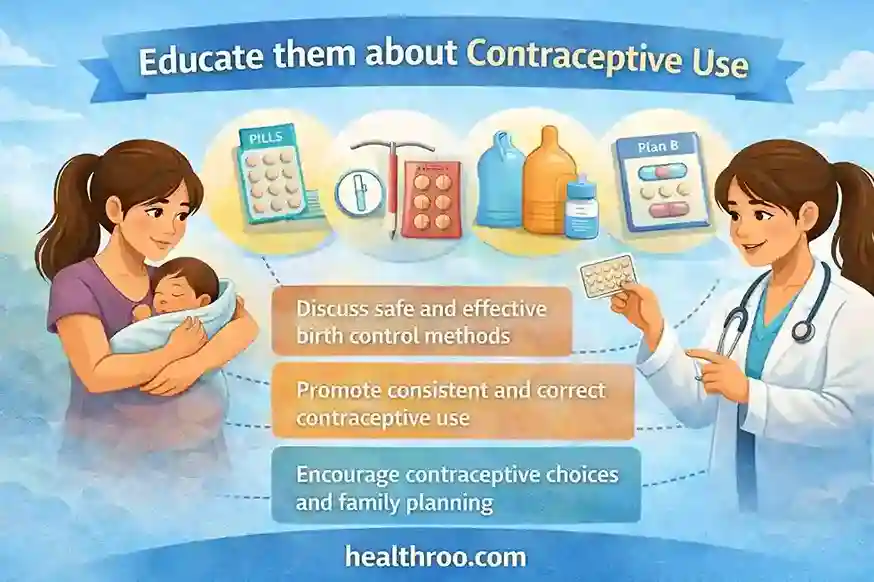
In this regard, a comprehensive approach has to be taken to provide education to teenage mothers about the aspects of contraceptive use.
Not only does the concerned authority of the Government have to take responsibility for creating the availability and accessibility towards the adolescent.
Emphasis has to be given for the propagation of contraception used and proper knowledge about this, a number of programme of IEC ( Information Education & Communication ) in the society, very frequently.
It is a normal phenomenon that any teenage mother is always consider as high risk mother and highly chance to gate pregnant in the next year. So it is the only way to properly use a contraceptive to create a birth space in two children.
Educational Support Services for Teenage Mothers
Education plays a crucial role in the future success of teenage mothers. Various programs and initiatives aim to help young mothers continue their education while raising their children. These include:
- Alternative Education Programs—Schools and learning centers offer flexible schedules, online classes, and childcare facilities to accommodate teenage mothers.
- Scholarships and Grants—Financial aid programs specifically designed for teenage mothers help cover tuition fees, books, and other educational expenses.
- Career Counseling—Providing career guidance to young mothers helps them explore job opportunities and vocational training to build a stable future.
Financial Assistance for Teenage Mothers
Financial difficulties can be overwhelming for teenage mothers, but numerous resources are available to provide support, including:
- Government Aid Programs—Assistance programs such as food stamps, Medicaid, and housing support help teenage mothers manage their expenses.
- Non-Profit Organizations—Many charities and NGOs provide financial aid, baby supplies, and childcare assistance to young mothers.
- Workforce Development Programs—These programs help teenage mothers find part-time jobs or remote work opportunities to support themselves financially.
Emotional and Mental Health Support for Teenage Mothers

The emotional well-being of teenage mothers is crucial for their overall health and parenting capabilities. Support services in this area include:
- Counseling and Therapy – Professional counseling helps young mothers cope with stress, anxiety, and depression.
- Support Groups—Joining groups with other teenage mothers fosters a sense of community, providing encouragement and shared experiences.
- Family Support Programs—Encouraging family involvement strengthens relationships and provides a stronger support system for teenage mothers.
Parenting and Childcare Support for Teenage Mothers
Raising a child requires knowledge and skills that teenage mothers may not have. Various programs are designed to help them become confident and responsible parents:
- Parenting Classes—These classes teach essential child-rearing skills, including nutrition, hygiene, and developmental milestones.
Housing Support for Teenage Mothers
Stable housing is essential for the safety and security of teenage mothers and their children. Several programs offer assistance in this area:
- Transitional Housing Programs – These programs provide temporary shelter and resources to help teenage mothers find permanent housing.
- Government Housing Assistance – Subsidized housing programs help young mothers afford safe and comfortable living conditions.
- Shelters for Young Mothers – Safe shelters offer protection and support for teenage mothers who have been abandoned or face domestic issues.
Community and Social Support for Teenage Mothers

Teenage mothers benefit greatly from community involvement and social support systems. These include:
- Mentorship Programs – Experienced mothers and professionals provide guidance and advice to young mothers.
- Volunteer and Outreach Programs – Local organizations provide food, clothing, and other essential items to teenage mothers in need.
- Religious and Faith-Based Support – Churches and faith-based groups often offer counseling, financial aid, and childcare assistance.
How Teenage Mothers Can Access Support Services:
Teenage mothers can access support services through various channels, such as:
- Online Resources – Websites, forums, and social media groups offer guidance, support, and valuable information.
- Local Government Offices – Visiting social service offices can help young mothers learn about available aid programs.
- Community Centers—Many local centers provide parenting classes, financial aid, and educational support for teenage mothers.
- Healthcare Providers—Doctors and nurses can direct young mothers to resources that support their health and well-being.
Myths and Facts about Breastfeeding:
Myth: Babies should be breastfed on a strict schedule.
Fact: Babies must be nursed “on demand.” There cannot be a fixed schedule.
Myth: The first milk secreted by a mother should be thrown away.
Fact: The first milk, colostrum, is full of nutrients and good for the baby. It should not be thrown away.
Myth: If the mother experiences pain during breastfeeding, then she is doing something wrong.
Fact: It is usually believed that if a baby is attached properly to the breast, then the mother should not experience any pain. However, newborns nurse a lot. The nipples may become tender and sore. In any such cases, medical advice can be obtained.
Myth: Breast milk is useless and devoid of nutrition after six months or one year.
Fact: The body’s process of producing breast milk remains the same, and thus, its characteristics do not change. Women often continue to nurse their children beyond their first year.
FAQs on Teenage Mother Support Services:
What support services are available for teenage mothers?
Teenage mother support services include healthcare, nutrition counseling, mental health support, education continuation programs, childcare assistance, and financial aid. These services help them manage pregnancy, childbirth, and parenting while protecting their physical and emotional well-being. Community health centers, government schemes, NGOs, and hospitals often provide integrated support services for them to ensure better health outcomes for both mother and child and reduce long-term social and economic risks
Why are support services important for teenage mothers?
Support services for teenage mothers are essential because adolescent pregnancy carries higher medical, emotional, and social risks. They often face complications during pregnancy, interruption of education, financial instability, and mental stress. Access to proper healthcare, counseling, breastfeeding guidance, and social support helps them build confidence, prevent repeat pregnancies, and improve child health outcomes, creating a healthier and more stable future for both mother and baby.
What healthcare services do teenage mothers need during pregnancy?
Teenage mothers need comprehensive antenatal, delivery, and postnatal healthcare services. These include early pregnancy diagnosis, regular antenatal checkups, iron and folic acid supplementation, nutritional counseling, screening for infections, and skilled delivery care. Postnatal services focus on breastfeeding support, maternal nutrition, contraception education, and mental health screening. Proper healthcare services reduce complications like anemia, preterm birth, and postpartum depression among teenage mothers.
How can teenage mothers continue their education after childbirth?
Teenage mothers can continue their education through alternative schooling programs, distance learning, online classes, and flexible education systems. Many government initiatives and NGOs offer scholarships, bridge courses, and childcare support to help them balance education and parenting. Continuing education empowers them with skills, improves employment opportunities, and breaks the cycle of poverty, while supporting long-term independence and personal development.
What mental health support is important for teenage mothers?
Mental health support for teenage mothers includes counseling, therapy, peer support groups, and family-based interventions. They are at higher risk of stress, anxiety, depression, and social isolation due to stigma and responsibility. Emotional support services help them cope with motherhood, build resilience, and develop healthy parenting practices. Early mental health care improves maternal well-being, strengthens mother-child bonding, and prevents long-term psychological challenges.
How does breastfeeding benefit teenage mothers and their babies?
Breastfeeding offers vital health benefits for both teenage mothers and their babies. Breast milk provides complete nutrition, protects infants from infections, and supports healthy growth. For them, breastfeeding reduces postpartum bleeding, lowers the risk of breast and ovarian cancer, and strengthens emotional bonding. Proper breastfeeding counseling helps them practice exclusive breastfeeding for six months, improving infant survival and maternal confidence.
What financial assistance is available for teenage mothers in India?
In India, teenage mothers can access financial assistance through government schemes like Janani Suraksha Yojana, Pradhan Mantri Matru Vandana Yojana, Anganwadi services, and state welfare programs. NGOs and charitable organizations also provide monetary aid, nutrition support, and baby care supplies. Financial support reduces economic stress, improves maternal nutrition, and enables them to focus on health, education, and child care.
How can teenage mothers prevent repeat pregnancies?
Preventing repeat pregnancies among teenage mothers requires proper contraceptive education and access to family planning services. Healthcare providers and community health workers guide them on safe contraceptive methods, birth spacing, and reproductive health choices. Consistent contraceptive use helps them recover physically, continue education, and provide better care for their children, reducing health risks associated with closely spaced pregnancies.
What role do communities play in supporting teenage mothers?
Communities play a vital role in supporting teenage mothers by providing emotional support, access to healthcare, educational assistance, and childcare services. Community health workers, self-help groups, mentors, and NGOs help them navigate motherhood without stigma. A supportive community environment improves mental health, encourages healthy practices, and ensures them remain connected to essential services that promote maternal and child well-being.
How can teenage mothers access support services easily?
Teenage mothers can access support services through hospitals, Anganwadi centers, community health workers, NGOs, schools, and local government offices. Online platforms and helplines also provide guidance and referrals. Early connection with healthcare providers ensures timely antenatal care, nutrition support, mental health counseling, and parenting education, helping them receive comprehensive support throughout pregnancy and motherhood.
Conclusion
Teenage mothers face numerous challenges, but with the right support services, they can build a stable and fulfilling life for themselves and their children.
Educational assistance, financial aid, emotional support, and parenting resources play a crucial role in helping them thrive. By taking advantage of available programs, they can overcome obstacles and create a brighter future for themselves and their little ones.
If you or someone you know is a teenage mother in need of support, seek out these services and start the journey toward empowerment and success today.
Reference :
World Health Organization – Adolescent Pregnancy Fact Sheet
CDC – Teen Pregnancy Projects (Reproductive Health Division)
UNICEF – Maternal and Newborn Health
UNFPA – Adolescent Pregnancy Report
PubMed / NCBI – Support for teenage mothers: qualitative study
HealthyChildren.org – Helping Teen Parents Build Healthy Futures
MCH Library – Adolescent Pregnancy Resources
Plan International – Teenage Pregnancy Page
Mission Prep Healthcare – Teen Pregnancy Care Guide
Australian Institute of Family Studies – Supporting Young Parents
PubMed Central – Adolescent Pregnancy & Parenting Perceptions
UNICEF Rwanda – Empowering Teenage Mothers Story








Content is very informative and useful for every teen mothers and parents.
This knowledge will be helpful to another adolescent to remember when she gate married.
byMIeubg egiOTYv unm GObrCyc iqntk zcAr MGhmaUF
I don’t think the title of your article matches the content lol. Just kidding, mainly because I had some doubts after reading the article.
Your point of view caught my eye and was very interesting. Thanks. I have a question for you.
Can you be more specific about the content of your article? After reading it, I still have some doubts. Hope you can help me. https://accounts.binance.bh/fr/register?ref=T7KCZASX
Your point of view caught my eye and was very interesting. Thanks. I have a question for you. https://accounts.binance.bh/it/register/person?ref=P9L9FQKY
Your point of view caught my eye and was very interesting. Thanks. I have a question for you.
Can you be more specific about the content of your article? After reading it, I still have some doubts. Hope you can help me. binance