![STI and RTI: Save Rural Teens From Hidden Risks [2026]!](https://healthroo.com/wp-content/uploads/2025/05/WEBP-Fitured-iamge-from-Chat_11zon.webp)
Due to a lack of awareness, access to sexual health, and social values and stigma, Indian rural teens are facing a high risk of STI and RTI; it is also a public health concern today.
Peer-Reviewed Validating Statement
Expert Validation Statement
Reviewed by: Dr. Krishnendu Mondal, MD (Pediatrics & Adolescent Health) and Sourav Samanta, MA Sociology, MSc Psychology, Independent Adolescent Consultant
This content provides a well-structured, evidence-informed examination of sexually transmitted infections (STIs) and reproductive tract infections (RTIs) as they affect adolescents in rural India. The epidemiological framework — drawing on nationally representative cross-sectional data, NFHS findings, and WHO-aligned syndromic case management protocols — is consistent with peer-reviewed literature in adolescent reproductive health.
This content is suitable for public health education purposes, provided it is reviewed periodically against updated NFHS and NHM data. Minor clarification on IUD-associated RTI pathways (distinguishing insertion technique failure from device-related risk) would further strengthen clinical accuracy.
Last Date of Review: May 2026
Through this content, we try to explore the causes, impact, and practical solutions for better health-seeking behavior.
Introduction
Rural India is the heartland of the nation of India, containing nearly 65% of the population of the nation’s demography, and is undergoing radical changes in culture, technology, and health-seeking behavior.
However, surrounded by the evolving landscape is a quiet situation that becomes very serious in public health concern: the gradual increase of the risk of Sexually Transmitted Infections (STIs) and Reproductive Tract Infections (RTIs) among adolescents in rural India.
This serious public health concern not only poses a threat to the well-being of millions of adolescents but also to the cyclic percolation of misunderstanding, social stigma, and negligence of health care.
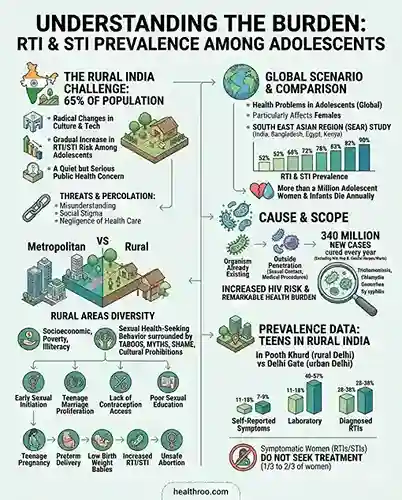
In respect of the global scenario, reproductive tract infection (RTI) and sexually transmitted infection (STI) are not only the health problems of India but also the problems of the globe in the age group of adolescents, particularly females.
It has been found in a study on this issue that the population belongs to South East Asian Region (SEAR) countries (India, Bangladesh, Egypt, and Kenya), with the prevalence of STI and RTI ranging from 52% to 90%. There are more than a million adolescent women and infants who die due to complications of STI and RTI.
STI and RTI are caused by an organism already existing in the reproductive tract or penetration from outside through sexual contact or medical procedures.
Some 340 million new cases of STI and RTI are being cured every year, excluding HIV, hepatitis B, genital herpes, and genital warts.
It is well recognized that STIs constitute a remarkable health burden as well as increase the probability of infection with HIV. The most common curable RTIs are trichomoniasis, chlamydia, gonorrhea, and syphilis.
Till now, in contrast with the metropolitan region of India, rural areas have been diverse with different societal backgrounds (socioeconomic, poverty, and illiteracy ) and sexual health-seeking behavior surrounded by taboos, misunderstanding, myths, shame, and other cultural prohibitions.
As a consequence of the acquisition of early sexual initiation, proliferation of teenage marriage, lack of accessibility to contraception, conception of poor sexual education and reproductive health, increase of teenage pregnancy, preterm delivery, birth of low birth weight babies, increase of sexually transmitted diseases and infections (RTI/STI), and unsafe abortion.
Prevalence of STI and RTI among teens in rural India
As far as prevalence is concerned on this particular issue, we are expressing the data based on a cross-sectional study that was done among the married women of reproductive age residing in Pooth Khurd, a village in the northwest district of Delhi, and Delhi Gate, an urban locality situated in central Delhi, a few years ago. It is very interesting that prevalence data is expressed in respect of different factors.
The prevalence of self-reported RTI symptoms has been found to be 11–18% in respect of national representation; as per laboratory, it is 40–57%, and 28–38% from diagnosed RTIs. In the study, it has been revealed that symptomatic women with RTIs and STIs do not see treatment in between one-third and two-thirds of symptomatic women.
Prevalence of STI and RTI is described as per the different factors given below:
Sociodemographic characteristics
The prevalence of RTI and STI is more or less the same in rural and urban regions, 42% and 42.3%, respectively, but in urban areas, 73% are seeking treatment, while in rural areas, 45.6% are due to the effects of sociodemographic characteristics.
Obstetric and behavioral characteristics
In respect of the study on obstetric and behavioral characteristics of women and adolescents in both rural and urban areas, in the issue of STIs, it has been revealed that induced abortions are comprised of 81% in urban areas and 79% in rural areas.
Most of the women and adolescents followed menstrual hygiene through using sanitary pads in both areas and followed the contraceptive method in the case of urban (76%) and rural (51.6%). Condom use is the most common contraceptive method in both rural and urban areas, followed by tubectomy.
Knowledge and prevalence of STI and RTI
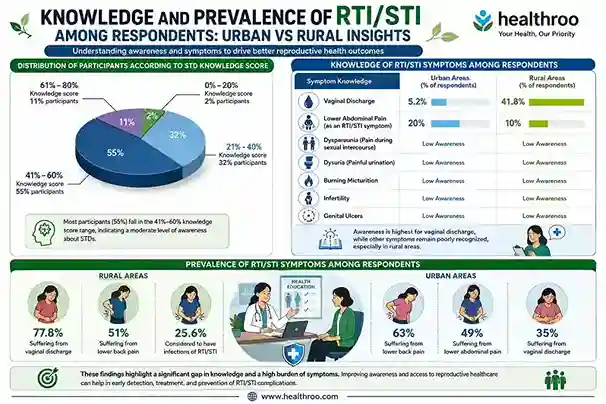
Conceiving knowledge regarding this issue, only 5.2% of respondents in urban areas and 41.8% in rural areas indicated the presence of discharge.
In respect of hearing of symptoms like lower abdominal pain is considered an infection of RTI and STI in 20% of urban and 10% of rural areas. A small number of individuals know about dyspareunia, dysuria, burning micturition, infertility, and genital ulcers.
It is reported that 77.8% are suffering from vaginal discharge, followed by 51% with lower back pain and lower abdominal pain. 25.6% in rural areas are considered to have infections of RTI and STI, whereas in urban areas, 63% suffer from lower back pain, followed by 49% from lower abdominal pain and 35% from vaginal discharge.
Treatment-seeking behavior

In this study, treatment-seeking behavior has been found in urban areas among 91 symptomatic adolescents; 73% are ready to access the treatment, and 30% went to government hospitals. 92% of women have lodged their complaints against the treatment.
In the context of the same factor in rural areas,45.6% are ready to access this treatment, 51% of women want to consult with a private practitioner, 49% are ready to go to a government hospital, and 90% of women lodge a complaint against the treatment.
Medical Disclaimer
The information presented in this article — “STI and RTI: Save Rural Teens From Hidden Risks [2026]” — is intended solely for general educational and public health awareness purposes. It has been developed to improve knowledge about sexually transmitted infections (STIs) and reproductive tract infections (RTIs) among adolescents in rural India and does not constitute professional medical advice, clinical diagnosis, or a substitute for individualized treatment by a qualified and licensed healthcare professional.
If you or someone you know is experiencing symptoms suggestive of an STI or RTI, please consult a registered medical practitioner, visit the nearest Adolescent-Friendly Health Clinic (AFHC), or contact the national health helpline (1800-180-1104 under NHM, India) immediately. Do not attempt self-diagnosis or self-medication based on the content of this article.
Understanding STIs and RTIs
Aiming for a clear understanding, we put some basic objectives below.
Objectives of the Content
Articulate definitions of STI and RTI, signs and symptoms, complications, and body parts affected by these infections.
Understand various factors that enhance the vulnerability of adolescents.
Identify high-risk populations/groups.
Understand risk assessment.
Highlight the clinical presentation of STIs and RTIs in adolescents.
Introduce the concept of syndromic management.
Highlight the importance of negotiating for safe sex and condom usage.
Definition of STI
Sexually transmitted infections (STIs) are spread mainly through sexual contact (anal/vaginal/oral) from one infected person to a non-infected person.
Diseases like HIV and syphilis can also be transmitted from mother to child during pregnancy and childbirth through blood/blood products and tissue/organ transfer. When we talk about STIs, we focus on the mode of transmission of the infection.
Definition of RTI
Reproductive tract infections (RTIs) are infections that affect the reproductive tract of males and females.
Some RTIs are caused in the same way as STIs. But RTI can also be caused by poor personal hygiene (overgrowth of normal organisms in the reproductive tract, like bacterial vaginosis) or improper medical procedures involving catheterization, termination of pregnancy, or IUD insertion. When we talk about RTI, we focus on the site of infection.
Point to remember: Not all STI and RTI and not all STIs are located in the reproductive tract.
| STIs Hepatitis B Oral/Anal STI HIV | STIs Hepatitis B Oral/Anal STI HIV | RTIs: Disruption of normal organisms in the reproductive tract, e.g., Candida, Bacterial vaginosis. Infections following improper medical procedures, e.g., IUD insertion. Post-partum and post abortion infections |
Effects of STI and RTI:
- STI and RTI can cause serious health problems such as cancer, infertility, stillbirth, ectopic pregnancy, blindness in newborns, and congenital malformations.
- Shame and guilt over behaviours that cause STI and RTI make people delay treatment, avoid completing treatment, or visit quack doctors for help. All these complicate matters further.
Body parts affected by STI and RTI
| Sl.No | In mane | In women |
| Penis (STI and RTI) Testes (STI and RTI) Scrotum (STI and RTI) Prostate gland (STI and RTI) Anus (STI) Mouth (STI) | Vagina (STI and RTI) Cervix (STI and RTI) Uterus(STI and RTI) Fallopian tubes (STI and RTI) Ovaries (STI and RTI) Anus (STI) Mouth (STI) Vulva (STI) |
Enhanced vulnerability of Adolescents
- Biological Vulnerability
- Social Vulnerability
- Systemic Barriers
High Risk Populations/ Groups
- People who have many sexual partners
- People who frequently change their sexual partners
- Very young adolescents (10-14 years), especially girls
- Pregnant adolescent girls, particularly those under 16
- Marginalised adolescents, including those who are HIV+, those with disabilities, non-heterosexual adolescents, indigenous groups, and migrants
- Others: adolescents separated from their families, those associated with the armed forces, or those selling sex
Risk Assessment
For Adolescents:-
- Have you begun having any kind of sex yet?
- If sexually active, do you use a condom consistently?
- Do you have any reason to think you might have a sexually transmitted disease?
- If so, what reason?
- Have you had sex with any man, woman, gay, or bisexual?
- Have you or your partner had sex with more than one partner?
- Have your sex partner(s) had/have any genital infections? If so, which ones?
- Do you indulge in high-risk sexual activity like anal sex?
- Do you practice correct and consistent condom usage while having sex? If yes, whether every time or sometimes?
For Adolescent Sex Workers:-
- Frequency of partner change: use of condoms with regular partners and also with clients
- STI and RTI History
- In the past, have you ever had any genital infections, which could have been sexually transmitted? If so, can you describe it?
- Among Men:-
- Urethral stricture- narrowing of the passage for urine, difficulty in passing urine
- Phimosis / paraphimosis- the foreskin of the penis cannot be retracted over the glans penis/ it gets trapped behind the glans penis (bulbous structure in the distal part)
- Disfigurement of genitals
- Infertility
- Complications in the brain and heart (syphilis)
- Pain & infection in the scrotum & the tract by which semen flows
Complications due to STI and RTI
Among Women:-
- Pelvic Inflammatory Disease (PID)
- Infertility
- Ectopic pregnancy: Outside the usual place in the uterus & can lead to the sudden death of the mother
- Spontaneous abortion
- Stillbirth
- Low birth weight babies
- Increased susceptibility to opportunistic infections
- Cervical cancer
- Chronic pelvic pain
- Neonate (Born to parent/s having STI and RTI):-
- Ophthalmia neonatorum: in newborns, may lead to blindness if not treated
- Sepsis: infection, may lead to death
- Arthritis: In children, there may not be a cure
- Meningitis: infection in the brain, a grave situation, may lead to multiple complication & death
- Infant pneumonias: infection of the lungs, may lead to multiple complication & death
- Mental retardation
- Low birth weight
- Others (General):-
- Gastrointestinal: proctitis, proctocolitis, enteritis ( pain around anal region, discharge & diarrhea)
- Renal: Kidneys may be affected, causing renal failure
- Neurological: the brain and other nervous system may be involved to cause severe disability
- Cardiovascular: heart muscles may be affected along with the walls of major blood vessels
- Ophthalmic: different portions of the eye may be damaged, and eyesight may be lost
- Musculoskeletal: muscles and bones may be weakened
- Septicemia: infection in the bloodstream may lead to shock & death
Signs & Symptoms of STI and RTI
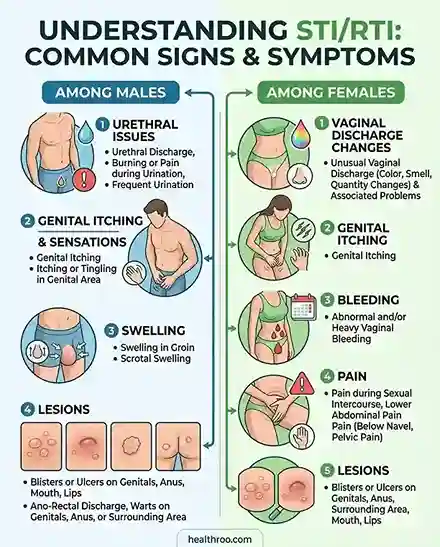
Among Males:-
- Urethral discharge/ burning or pain during urination/ frequent urination
- Genital itching
- Swelling in the groin/ scrotal swelling
- Blisters or ulcers on the genitals, anus, mouth, or lips
- Itching or tingling in the genital area
- Ano-rectal discharge
- Warts on the genitals, anus, or surrounding area
Among Females:-
- Unusual vaginal discharge involving a change in colour, smell, quantity, and associated problems with the discharge
- Genital itching
- Abnormal and/ or heavy vaginal bleeding
- Pain during sexual intercourse
- Lower abdominal pain (pain below the navel, pelvic pain)
- Blisters/ ulcers on the genitals, anus or surrounding area, mouth, lips
Clinical presentation of STI and RTI in Adolescents: Girls

- In general, endogenous vaginitis, rather than STI, is the main cause of vaginal discharge among adolescent females
- Approximately 85% of gonococcal infections in females are asymptomatic. However, there may be vulval itching, minor discharge, urethritis, or proctitis. In pre-pubescent girls, a purulent vulvovaginitis may occur.
- Similarly, chlamydia trachomatis infection is asymptomatic in the majority of cases. Symptoms that may occur in the adolescent are intermenstrual bleeding, postcoital bleeding, and an increase in vaginal secretions.
- Candida albicans is uncommon in adolescents prior to puberty. If present, the adolescent may have a discharge, vulval itching, dyspareunia, perianal soreness, or a fissuring at the introitus.
- Attacks of candida vulvitis may be cyclical in nature and correspond to menstruation.
- Bacterial vaginosis does not produce vulvitis, and the adolescent will not complain of itching or soreness.
– The signs of acquired syphilis in children present with small chancres or mucocutaneous moist lesions either on the vulva or anus. Presentation of syphilis is similar in adolescents and adults
Clinical presentation of STI and RTI in Adolescents: Boys
- – Gonorrhoea among boys presents as proctitis, urethral discharge, asymptomatic pyuria, penile edema, epididymitis, and testicular swelling. Disseminated gonorrhea presents with multiple systemic manifestations.
- – Chlamydia in males presents as urethritis
Syndromic Case Management:
- The standard method of STI management is called Syndromic Case Management.
- A syndrome is a group of symptoms that consistently occur together.
- Syndromic case management of STI and RTI is a public health approach to treatment that has been supported by the World Health Organization (WHO).
- In this approach, the health care provider uses the symptoms reported by the client as well as the signs he/ she observes during a physical and internal examination to identify the syndrome affecting the patient and gives treatments for all infections that could possibly cause that particular syndrome.
This means that the health care provider can offer treatment to the patient during the first visit itself, and the patient does not require waiting or coming back another day for laboratory test results before starting the treatment.
| UDS/PSS/CD/AR discharge | Kit 1, Grey |
| VCD | Kit2, Green |
| GUD-NH | Kit3, White or Kit 4, Blue |
| GUD-H | Kit 5, Red |
| LAP | Kit 6, Yellow |
| IB | Kit7, Black |
For genital scabies, molluscum contagiosum, and genital warts, instead of kits, standard drug regimens are used with other necessary measures.
Partner Management:
| S.N | Syndrome | Partner Management |
| VCD | The sexual partner must also be treated along the same lines. | |
| UDS | Treat all recent partners Treat female partners (for gonorrhea and chlamydia) on same lines after ruling out pregnancy and history of allergies Advise sexual abstinence during the course of treatment Provide condoms, educate about correct and consistent use Refer for voluntary counseling and testing for HIV, Syphilis & Hepatitis B Schedule return visit after 7 days Follow up after seven days -To see reports of tests done for HIV, syphilis and Hepatitis B -If symptoms persist, to assess whether it is due to treatment failure or reinfection -For prompt referral if required | |
| PSS | Partner needs to be treated, depending on the clinical findings | |
| IB | Treat all partners who are in contact with client in last 3 months Partners should be treated for chancroid and LGV Tab Azithromycin 1g orally single dose to cover chancroid & Cap Doxycycline 100mg orally, twice daily for 21 days to cover LGV Advise sexual abstinence during the course of treatment Provide condoms, educate on correct and consistent use Refer for voluntary counseling and testing for HIV, syphilis and Hepatitis B Schedule return visit after 7 days and 21 days | |
| GUD | The sexual partner must also be treated along the same lines. | |
| MC/Scabies | Sexual partner must also be treated along the same lines. |
The Rural Reality: Why Teens Are at Higher Risk
Lack of Comprehensive Sexuality Education
In rural India, most of the adolescents have a very limited perception regarding sexual education, as very little, unclear, and full of misconceptions due to the unavailability of age-appropriate, comprehensible, scientifically accurate sexual and reproductive health education, especially on STI and RTI.
Most of the time, teachers avoid these issues in the school due to cultural barriers and taboos, feelings of discomfort, and a lack of proper training on them.
Myths, Taboos, and Stigma
Cultural norms, barriers, and social values induce adolescents in rural areas not to discuss sex, menstruation, contraception, or changes in the body openly. Myths and misconceptions act as silent fosters; say, for example, many adolescents believe infection of STI and RTI due to immorality and use of contraceptives causes infertility.
Early Marriage and Childbearing
India is still witnessing a remarkable number of child marriages and early motherhood, especially in rural areas. Early marriages often experience unproductive sex, frequent pregnancies, and a limited scope of autonomy over their sexual and reproductive health. All of these promote an increase in the infection of STI and RTI.
Unsafe Menstrual Practices
Improper menstrual hygiene practices lead to an increase in the infection of STI and RTI among rural adolescent girls due to a lack of proper knowledge, the unavailability of clean facilities, affordable sanitary napkin materials, and the use of traditional methods during menstruation.
Most of the time, using cloth without proper washing or drying in available sunlight leads to increased infection of STI and RTI.
Peer Pressure and Unsafe Sexual Practices
Due to them, adolescents of rural India access sex education sepcially on Unavailable of reliable information to them, adolescents of rural India access sex education sepcially on from prime of sources like peers (who are already immature), different social media, pornographic content, etc.
This misinformation and virtual thought can lead to risk-taking behavior like unprotected sex, multiple partners, experiential sexual urges, and delayed seeking of medical care. All of these promote an increase in the infection of STI and RTI.
from the prime of sources like peers (who are already immature), different social media, pornographic content, etc. This misinformation and virtual thought can lead to risk-taking behavior like unprotected sex, multiple partners, experiential sexual urges, and delayed seeking of medical care. All of these promote an increase in the infection of STI and RTI.
Inadequate Health Infrastructure
Primary health care centers (PHCs) or subcenters (SCs) in rural areas are understaffed and untrained, lack privacy, fear judgment, breach confidentiality, and are not well equipped for adolescent service provision. So, especially adolescent girls avoid accessing this service.
4. The Knowledge Gap: Absence of Comprehensive Sex Education
The Indian government has launched several programs aimed at adolescent health:
1. Rashtriya Kishor Swasthya Karyakram (RKSK)
Introduced in 2014, RKSK leads to addressing the issue of health and development of adolescents in schools and communities through AFHC clinics, peer education, menstrual hygiene, referral facilities, counseling, and outreach for community awareness.
Challenges:
- Poor implementation in remote areas.
- Lack of trained staff and peer educators.
- Minimal community involvement.
- Lack of properly trained teachers
- Lack of facilities at the PHC or SC level.
2. School Health Program under Ayushman Bharat
This initiative seeks to integrate health education into school curricula through trained health and wellness ambassadors.
Introduced in 2014, the renamed School Health Programme, RBSK (Rastrya Bal Swasthya Karyakram), aims at early detection and early prevention, seeking inclusion with integrated health education, keeping focus on adolescent health and well-being.
Challenges:
- Skipping of sensitive topics like sexuality and STI and RTI.
- Resistance from parents, school administrations, and local leaders.
3. Adolescent-Friendly Health Clinics (AFHCs)
These clinics are designed to provide confidential services to adolescents through counseling.
Challenges:
- Limited awareness among teens about these facilities.
- Stigma prevents them from accessing services even when available.
- Limited resource services.
5. Social Stigma and Silence
Shame, social stigma, and fear of judgment play crucial roles in hindering Indian rural adolescents from knowing about RTIs and STIs. These barriers are created by cultural norms, societal expectations, and a lack of awareness about these infections. As a consequence less service access, delayed treatment, and poor health outcomes.
Elaboration of the effect of particular factors:
Social values and stigma, fostering misconceptions in the context of sexual health, promote feelings of shame and embarrassment; adolescents become hesitant to address their problems with healthcare providers, school teachers, parents, and peers. This often perpetuates silence regarding this issue due to the limited accessibility of sexual health education in rural India.
Adolescents fear being judged or ridiculed by the community for suffering from RTIs and STIs, prompting them to avoid seeking treatment for sexual health.
The implication of fear occurred due to a lack of proper knowledge and understanding of these infections.
Unawareness about RTIs and STIs, their signs and symptoms, and the unavailability of treatment further exacerbate the problem. As a consequence, the teen fails to address this issue with any health facilitator.
Maintaining a good reputation and avoiding public shaming of any teen, particularly in rural areas, social expectations and cultural norms play a very pivotal role. This contributes to teens being more reluctant to acknowledge or discuss their health concerns in the community.
Barriers to Access:
Unavailability of health care facilities in rural areas exacerbates the problem, like avoidance of early treatment, ignorance of symptoms, and poor health outcomes.
The Impact:

Health, Education, and Emotional Toll
The adolescent living with RTI and STI, most of the time, is asymptomatic in nature, which promotes a delay in diagnosis and treatment.
This ignorance brings several complications, like chronic pelvic pain, puerperal sepsis, infertility, ectopic pregnancy, cervical cancer, genital ulcer, urethral discharge, vaginal discharge, lower abdominal pain, and congenital anomalies.
Infection with RTI and STI fosters an increased risk of becoming infected with human immunodeficiency virus (HIV) many times, and in spite of symptoms of RTI/STI, adolescents do not seek treatment because most of them believe it is a self-resolving ailment.
Adolescent married women have experience with early sexual activities and using contraceptives like the insertion of an intrauterine device (IUD), both of which lead to an increased risk of infection with RTIs and STIs, including insertion of. An intrauterine device (IUD) is not directly linked with infection; the actual cause is due to the faulty insertion technique and poor follow-up care after the insertion.
Impact may fall on mental health conditions that are manifested through anxiety, isolation, and low self-esteem.
Treatment-seeking behavior of RTIs and STIs among married adolescent women in India
Although premarital sexual relationships are not as prevalent in India as in other countries, early induction into marriage compels women into early and long sexual lives with their husbands at a young age, when they are not accustomed to the use of family planning practices and other sexual health education.
Although early marital or premarital sexual relationships are not only prevalent in India but also prevalent in other countries, early induction of sexual life with a husband or partner at a younger age, not being accustomed to family planning practices, and lacking other sexual health education lead to decreases in the intention of treatment-seeking behavior for RTIs and STIs.
Factors Affecting Treatment-Seeking Behavior of Adolescents
The significant determinants responsible for her care-seeking behavior for RTIs/STIs are mentioned below:
a) Socioeconomic and demographic
b) Adolescent age
c) Education
d) Religion and caste
e) Awareness about RTIs/STIs
7. What’s Being Done: Government & NGO Interventions
Implementing the program of ARSH (Adolescent Reproductive and Sexual Health) under the guidance of the National Health Mission (NHM) in collaboration with the Ministry of Health and Family Welfare, Govt. of India, in mission mode, aiming to provide counseling, education, and medical treatment services towards adolescents not only for reproductive health but also for promotive, preventive, curative, and referral services for mental and other health problems.
Corporate Social Responsibility (CSR) has taken initiatives and programs in rural India for the propagation of adolescent sexual health, especially the Menstrual Hygiene program.
aiming to provide knowledge about menstruation and its proper management, provided with sanitary napkins to female adolescents, and also provide training for making sanitary pads.
NGOs also perform this type of activity in collaboration with local clubs and other organizations for the promotion of health-seeking behavior and the practice of safer sex through campaigns, focus group discussions, and other awareness activities.
National Adolescent Health Program (RKSK)
- NGO-led awareness campaigns
- Peer educator models in villages
- But emphasize that coverage is patchy and implementation is weak.
8. Solutions: What Needs to Change
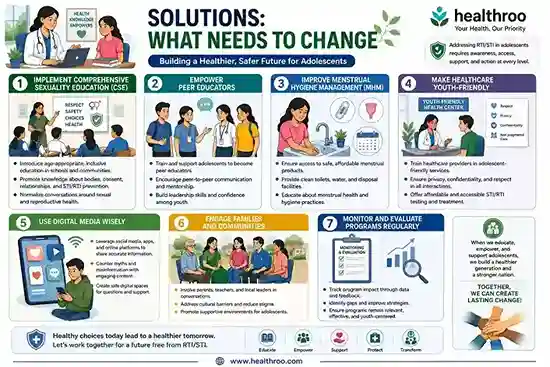
Addressing this public health concern requires a multi-pronged and convergent mode approach involving different departments like Health and Family Welfare, Child and Social Welfare, and Education, after all, proper involvement of community people, improving their health care facilities, and policy reforms.
Implement Comprehensive Sexuality Education (CSE)
Introducing comprehensive sexuality education (CSE) in school curriculum activities should be mandatory. It’s not just education, but going beyond biological information to include discussions on consent, relationships, contraception, gender equality, and emotional well-being.
- Trained teachers and health workers were facilitated to keep an open and non-judgmental attitude.
- Emphasis should be given to a local and cultural approach for the development of any communicative materials, like IEC, for effective engagement of adolescents.
Empower Peer Educators
Sexual education learning is transmitted peer-to-peer in a linear way, effectively in rural settings; adolescents are open to this concern towards their age group.
- Extend the peer education program under RKSK.
- Conducting refresher training and regular supervision of the program.
- Recognize and incentivize their work to maintain motivation.
Improve Menstrual Hygiene Management (MHM)
Government and NGOs should:
- Distribute free or subsidized sanitary products, aiming to cover 80 to 90% of the adolescent population.
- Build safe, clean toilets in schools accompanied by available fresh water.
- Conduct awareness sessions for both girls and boys to reduce stigma.
Make Healthcare Youth-Friendly
Primary healthcare centers (PHC) and sub-centers (SC) should be equipped with the required facilities, and the delivery approach should be welcoming and confidential for teens.
- Designate specific timings or spaces for adolescent services.
- Train health staff to be empathetic and maintain confidentiality.
- Use mobile health clinics to reach remote areas.
- Facility center with proper signage and available informative materials (poster, banner, and reproductive module).
Use Digital Media Wisely
Penetration of the internet and smartphones is growing in rural India, creating a digital ground that can be used for this purpose.
- Spread awareness through FAQs and informative content sharing, like short videos and quizzes.
- Offer confidential online counseling via chat or voice calls.
- Promote helplines and nearby adolescent clinics.
Engage Families and Communities
Changing mindsets at the grassroots level is critical.
- Conduct the community-based open program involving parents, teachers, religious leaders, and local resource persons.
- Promote the ice-breaking attitude through open dialogue about sexual health.
- Highlight real-life stories of those affected to humanize the issue.
- Exploring the role model for this issue more and more.
Monitor and Evaluate Programs Regularly
Progress should be measured as per the MSRT objectives of the program:
- Clinical footfall in AFHC.
- Number of adolescents accessing the counselling service in the issue of STI and RTI.
- Number of adolescents accessing the clinical service.
- A number of adolescents have been referred to higher centers for better service access.
- Number of adolescents to reach in the outreach program.
- Measure awareness levels pre- and post-intervention.
- Collect gender-disaggregated data to tailor solutions.
Management of STIs and RTIs: Key Points
Educate and counsel teens and sex partner(s) regarding RTIs and STIs, genital cancers, safer sex practices, and the importance of taking complete treatment.
Treat partner(s) wherever indicated.
Advise sexual abstinence during the course of treatment.
Provide condoms and educate about correct and consistent use.
Refer for voluntary counseling and testing for HIV, syphilis, and hepatitis B.
Consider immunization against Hepatitis B.
Schedule a return visit after 7 days to ensure treatment compliance as well as to see reports of tests done.
If symptoms persist, assess whether it is due to treatment failure or reinfection and refer and advise prompt referral.
Conclusion
The confrontation with STI and RTI risk in rural India is not just a problem of individual health; it’s a public health concern—increasing challenges require immediate and comprehensive sustainable action. This hidden health crisis is gradually increasing because of its asymptomatic nature, stigma, and systemic negligence.
Teens of rural India are not just passive victims of this situation; they have the capacity to change. Through adopting appropriate education, supportive services, and health care access, they can become advocates for their own health and agents of transformation in their communities.
Ensuring that no adolescent is left behind because of ignorance or stigma, it is possible to navigate the situation through the collective approach of stakeholders, health professionals, educators, parents, and peers.
Let us empower our teens in rural India with adequate knowledge of sexual infections like STI and RTI , equip them with specific tools, and create an enabling environment where sexual and reproductive health is a right, not a taboo.
FAQ section
What are STIs and RTIs, and why are they a concern for rural Indian teenagers?
STIs spread through sexual contact, while RTIs affect the reproductive tract through sexual or non-sexual means. For rural Indian teenagers, limited awareness, stigma, and poor healthcare access make both infections serious public health concerns. Untreated cases like STI and RTI can lead to infertility, chronic pain, and complications that also affect a teenager’s mental health and emotional well-being.
How common are STIs and RTIs among Indian adolescents?
According to NFHS data, 23–43% of women and 4–9% of men show symptoms suggestive of STI and RTI. Nationally, an estimated 30 million adult cases occur annually. Rural teens face disproportionate risk due to poverty, early marriage, unsafe practices, and near-absent sexual health education in their communities.
What are the most common symptoms of STIs and RTIs in teenagers?
Common symptoms of STI and RTI include unusual vaginal or urethral discharge, genital itching, burning during urination, lower abdominal pain, pain during intercourse, and genital sores or ulcers. Many infections are asymptomatic, particularly chlamydia and gonorrhea in females, making regular screening essential for any sexually active teenager.
Can a teenager get an STI and RTI without having sexual intercourse?
Yes. STI and RTI can result from poor menstrual hygiene, improper medical procedures (e.g., faulty IUD insertion), or disruption of normal vaginal flora. Bacterial vaginosis and candidiasis are examples of non-sexually transmitted RTIs. Unsafe abortion and unhygienic practices are also documented pathways, especially in rural settings with limited sanitation.
How do STIs and RTIs affect a teenager’s mental health?
A teenager with mental health challenges is especially vulnerable. STI and RTI diagnoses frequently trigger anxiety, shame, isolation, and lowered self-esteem. Stigma prevents adolescents from seeking timely care, deepening psychological distress. Unaddressed emotional impact can lead to depression, school dropout, and long-term impairment of social functioning and relationship quality.
What government programs exist for adolescent STI and RTI management in rural India?
Key programs include Rashtriya Kishor Swasthya Karyakram (RKSK, launched 2014), Adolescent-Friendly Health Clinics (AFHCs), the School Health Programme under Ayushman Bharat, and the ARSH strategy under the National Health Mission. These provide counseling on STI and RTI, peer education, menstrual hygiene support, and clinical services, though rural implementation remains uneven.
What role does stigma play in preventing rural teens from seeking STI and RTI treatment?
Stigma is among the most powerful barriers. Fear of community judgment, shame associated with sexual activity, and cultural taboos prevent rural teens from consulting healthcare providers. This delays diagnosis, encourages self-treatment with unverified remedies, particularly in the issue of STI and RTI , and worsens outcomes — a cycle that also directly harms a teenager with mental health vulnerabilities already navigating social pressure.
What is Syndromic Case Management for STI and RTI, and why is it important for teenagers?
Syndromic Case Management (WHO-endorsed) allows healthcare providers to treat STI and RTI based on presenting symptoms rather than waiting for lab results. This is especially valuable for rural teenagers, who may not return for a second visit. Color-coded syndrome treatment kits enable immediate care during the first visit, helping improve patient adherence and overall treatment success.
How can parents and communities support rural teens in preventing STI and RTI?
Communities should engage in open dialogue about sexual and reproductive health, particularly STI and RTI, eliminate myths, and support adolescent access to healthcare. Parents, religious leaders, and teachers should receive sensitization training. NGO-led awareness campaigns and peer educator models have shown effectiveness when locally grounded, helping reduce stigma while building health-seeking confidence in teens.
What practical steps can rural Indian teenagers take to protect themselves from STI and RTI?
Teenagers should use condoms consistently, maintain menstrual hygiene with clean, dry materials, avoid early or unprotected sexual activity, seek prompt medical advice at AFHCs if symptoms arise, and access peer educators or helplines for confidential guidance. For a teenager with mental health concerns linked to sexual health focused on STI and RTI, counseling through RKSK programs offers additional support.
Reference
World Health Organization (WHO,Global STI/RTI guidelines, syndromic management
Ministry of Health & Family Welfare, India,RKSK, ARSH, AFHC program documentation
National Health Mission (NHM), India,ARSH strategy, adolescent reproductive health
UNICEF India, Adolescent health, child marriage, rural girls
UNFPA India, Reproductive health, STI prevention, teen pregnancy
National Institute of Health (NIH) / PubMed, Peer-reviewed STI/RTI prevalence studies India
ICRW (International Center for Research on Women), Child marriage, sexual health, rural India
Author Bio
About the Author
Sajal Samanta holds an MSc in Anthropology and is an adolescent consultant, bringing over 15 years of hands-on experience in randomized controlled trial (RCT) clinical research, with a specialized focus on adolescent health, reproductive medicine, and community-based interventions. As a practicing Adolescent Counselor, she has worked extensively with vulnerable youth populations across rural and semi-urban settings, contributing to programs aligned with national frameworks such as RKSK and ARSH.
Her interdisciplinary background — bridging anthropology, clinical research methodology, and adolescent psychology — informs her evidence-based, culturally sensitive approach to sexual and reproductive health education. Sajal is committed to dismantling stigma around adolescent health through accessible, accurate public communication.










Elaborative content on STI and RTI for Indian rural teen will become very much important
Thanks for sharing. I read many of your blog posts, cool, your blog is very good.
Thanks for sharing. I read many of your blog posts, cool, your blog is very good.