
Substance abuse among adolescents in India: causes, types, warning signs, prevention, treatment, laws, and mental health impact explained.
Author Description – Sajal Samanta
Sajal Samanta is a senior health content writer, medical research analyst, and public health educator with over 25 years of experience in writing evidence-based articles on adolescent health, mental health, nutrition, and preventive medicine. He specializes in translating complex medical and public health concepts into clear, reader-friendly language for parents, students, and healthcare professionals.
At Healthroo.com, he focuses on creating ethical, awareness-driven, and research-supported content that promotes healthy lifestyle choices, early intervention, and informed decision-making among adolescents and their caregivers.

Dr. Krishnandu Mondal, MBBS, MD (Pediatrics & Adolescent Medicine), and Surav Samanta , Psychologist ( Specialized in child development, behavioral disorders, and adolescent mental health)
Dr. Krishnandu Mondal is a medical doctor specializing in pediatric and adolescent medicine. Mr.Surav Samanta, Psychologist, specializes in behavioral management with a strong focus on preventive healthcare, substance abuse prevention, and youth mental well-being. Both of them have worked closely with community health programs and adolescent-friendly health services (AFHCs). His review ensures the content reflects current medical understanding and best clinical practices. latest edition January,2026
Medical & Legal Disclaimer
The information provided in this article is intended for educational and awareness purposes only. It is not a substitute for professional medical advice, diagnosis, or treatment. Always seek the guidance of a qualified healthcare provider, pediatrician, psychiatrist, or addiction specialist with any questions regarding substance abuse, mental health conditions, or treatment options.
Healthroo.com, the author, and medical reviewers are not responsible for any outcomes resulting from the use of this information. Laws and treatment protocols may vary by region; readers are advised to consult local authorities or healthcare professionals for personalized guidance.
Substance abuse among adolescents has emerged as a significant public health concern in the past few decades in the world.
As the adolescent is a crucial phase of the developmental period, it is essential to understand how substance use can impact adolescents and the long – lasting consequences it may have on their mental, physical, and social well-being.
This article delves into the causes, the types, and the far-reaching effects of chemical substance abuse and its management for adolescents.
Understanding Adolescent Substance Abuse
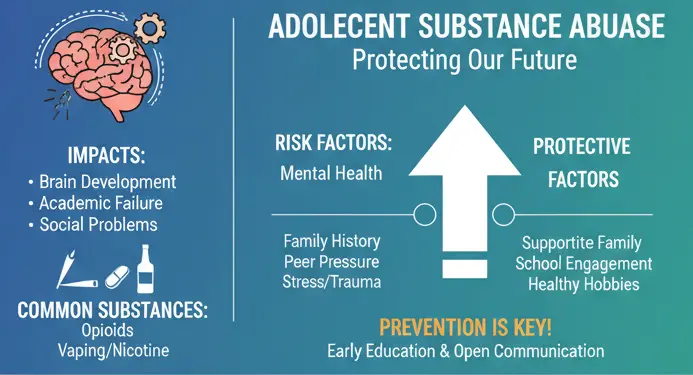
Substance means any chemical substance that is psychoactive in nature (i.e. , it is a prescribed medication that can affect an individual’s mental process) or a prescribed medication that is used illegally. Substance abuse refers to the harmful or hazardous use of psychoactive substances, including alcohol, tobacco, and illicit drugs. It alters perception, mood, thinking, behavior, and various other physical and psychological functions.
Adolescents are particularly vulnerable to substance abuse due to their experimental attitude, peer pressure, and urge of curiosity. Experimentation with substances often begins in early adolescence, and in many cases, this behaviour can escalate into chronic abuse.
When Use Becomes Abuse & Dependence:
Substance use becomes a cause of clinical concern when it aggravates the already existing illness of the user, impairs physical and psychological health, and may even cause premature death.
Substance use also becomes abuse when it endangers and harms other people, along with the user. For example, when a person drives under the influence of alcohol
Prevalence of Substance Abuse Among Adolescents in India.
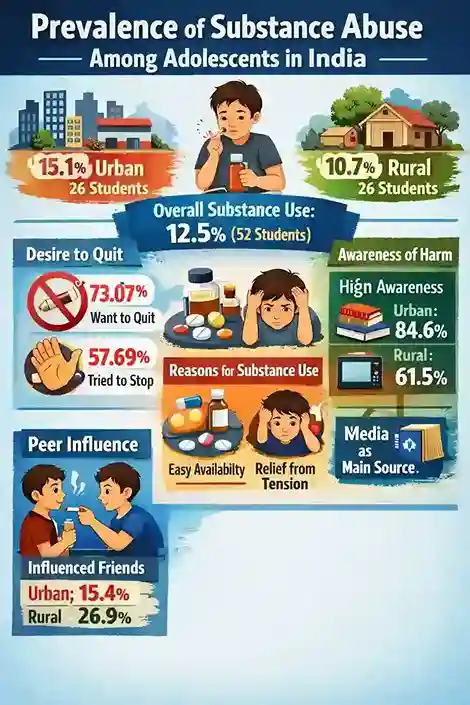
A comprehensive study was conducted by the National Institutes of Health (NIH) among the 416 students for analysis of the noxious situation of Substance abuse in the adolescent stage, and it has been seen that in respect of time frequency of life, the use or abuse of substances is 52(12.5%). In which in an urban area, it is 26(15.1%), and in a rural counterpar,t it is 26(10.7%). More than two-thirds (73.07%) of the respondents expressed a desire to quit substance use, and 57.69% had tried to stop.
After the repetitive interviews among the sample size of adolescent students, it has been revealed that Easy availability’ and ‘relief from tension’ were the most frequent reasons for the continuation of substance use.
The level of knowledge on the harmfulness of substance use among students was very high (urban -84.6% and rural -61.5%), and they stated the media as the most frequent source of information.
Substance Users were successful in influencing their peers into taking up this habit (urban -15.4% and rural -26.9%).
Warning Signs of Substance Abuse:
General Warning Signs:-
- Bloodshot eyes, pupils larger or smaller than usual
- Changes in appetite or sleep patterns. Sudden weight loss or weight gain
- Deterioration of physical appearance, personal grooming habits
- Unusual smells on breath, body, or clothing
- Tremors, slurred speech, or impaired coordination
- Behavioural signs
- Drop in attendance and performance at work or school
- Unexplained need for money or financial problems may lead to borrowing or stealing to get it
- Secretive or suspicious behaviours
- Sudden change in friends, favorite hangouts, and hobbies
- Frequently getting into trouble (fights, accidents, illegal activities)
- Psychological signs
- Unexplained change in personality or attitude
- Sudden mood swings, irritability, or angry outbursts
- Periods of unusual hyperactivity, agitation, or giddiness
- Lack of motivation, appears lethargic or “spaced out”
- Appears fearful, anxious, or paranoid with no reason
Factors of Substance Abuse and Dependency among Adolescents
Several factors contribute to adolescent substance abuse. These factors can be biological, environmental, or psychological in nature.
Psychological factors
- Peer Pressure and Social Influences
During adolescence, the desire to fit in and be accepted by peers is a strong driving force. Peer pressure can significantly influence a teenager’s decision to try drugs or alcohol, even when they are aware of the potential risks. The normalization of substance use in certain social circles or environments further exacerbates this risk. - Mental Health Issues
Many adolescents struggling with mental health issues, such as anxiety, depression, or trauma, may turn to substances as a form of self-medication. Substance use can temporarily alleviate emotional pain or distress, but it only worsens the underlying mental health conditions in the long run.
Family Environment
- A dysfunctional or unstable family environment can contribute to adolescent substance abuse.
- Teenagers who grow up in households with poor parental supervision, substance-abusing parents, or a history of family conflict are more likely to engage in substance use.
- Absent parents are unable to discipline, educate, or support the teen, who may be turning to the alternative reality often glamorised in substance abuse.
- Availability of Substances
The accessibility of substances such as alcohol, marijuana, and prescription drugs can contribute to their misuse. Peer access to substances and the ease with which they can be acquired, either legally or illegally, makes experimentation more likely. - Curiosity and Rebellious Attitude:
Adolescents are naturally more inclined to take risks as their brains are still developing. This behaviour often manifests as curiosity and a tendency to rebel against existing social norms and rules & try to experiment with substances, without fully understanding the long-term consequences of their actions.
Genetic and Biological Factors
Genetic Factors –
- Studies have confirmed the existence of a genetic predisposition to substance dependence, although the exact gene codes are yet to be detected.
- Adolescents with a family history of substance abuse or mental health disorders may be at a higher risk of developing similar issues.
Biological Factors :
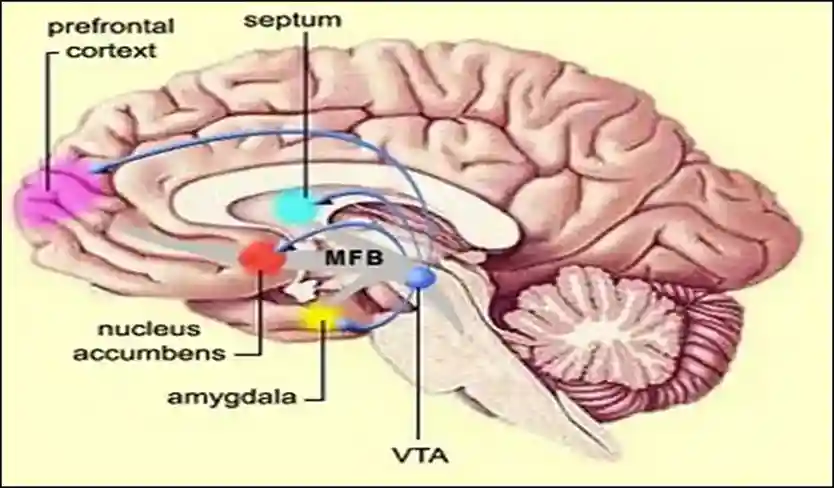
- Role of Neurotransmitters: Abnormalities in the Dopamine level can leads individual to eventually becomes dependant.
- Role of Exposure: it is based on the assumption that introduction of a substance into the body on a regular basis eventually leads to dependence, for example, regular use of “endorphin” ( natural pain killer ).
- Role of Conditioning: This follows the principles of classical and operant conditioning. Operant conditioning plays basically two ways: positive reinforcement and Negative reinforcement.
Through the classical conditioning process, the environmental accompaniments of substance use become powerful cues for replacement.
Commonly Abused Substances Among Adolescents
Adolescents are known to experiment with a variety of substances, each of which comes with its own set of risks. The most commonly abused substances include:
- Alcohol
Alcohol remains one of the most frequently abused substances among teenagers. Binge drinking, in particular, has been a growing concern, as it can impair cognitive function, increase risky behaviors, and lead to long-term health problems such as liver disease and neurological damage. - Tobacco and Nicotine Products
Smoking cigarettes and using other nicotine products, such as e-cigarettes, is common among adolescents. Nicotine addiction can develop quickly, and the long-term health effects of tobacco use are well-documented, including lung cancer, respiratory diseases, and cardiovascular issues. - Marijuana
Marijuana is one of the most widely used illicit drugs among teenagers. Though some view marijuana as a “harmless” drug, regular use can impair cognitive function, lead to mental health disorders, and increase the risk of addiction. The potency of marijuana has also increased in recent years, further elevating its risks. - Prescription Drugs
Prescription drug abuse has become an alarming trend among adolescents, especially the misuse of opioid painkillers, stimulants, and anti-anxiety medications. These substances can be highly addictive and, when misused, may lead to severe health consequences, including overdose and death. - Cocaine and Other Stimulants
Cocaine and other stimulant drugs are sometimes used by adolescents seeking a temporary “high.” These drugs are highly addictive and can cause serious physical and mental health issues, including cardiovascular problems, anxiety, and psychosis.
Consequences of Substance Abuse among Adolescents
The consequences of substance abuse among adolescents can be severe and far-reaching, affecting every aspect of their lives. The following domains are the primary areas impacted by adolescent substance abuse:
- Physical Health Risks
Adolescents who engage in substance abuse are at risk of developing a wide range of physical health problems. The immediate effects include respiratory issues, liver damage, and brain. Long-term abuse can result in chronic diseases such as cancer, cardiovascular problems, and irreversible damage to the brain. Adolescents are also more prone to accidents, injuries, and risky behaviors due to impaired judgment and coordination caused by substances. - Mental Health Implications
Substance abuse often co-occurs with mental health disorders. Adolescents who abuse substances are more likely to experience anxiety, depression, poor social skills and other mental health problems. Some substances, like marijuana and cocaine, can trigger or exacerbate mental illnesses, leading to long-lasting emotional and psychological consequences. - Academic and Cognitive Impairment
Substance abuse can have a detrimental effect on a teenager’s cognitive development. Alcohol, marijuana, and other drugs can impair memory, concentration, and overall academic performance. - Social and Behavioral Consequences
Substance abuse can have a negative impact on an adolescent’s social life and relationships. Teenagers who abuse substances are more likely to engage in risky behaviors, such as unsafe sex which brings infection of RTI/STI and HIV/AIDS driving under the influence, and aggression. These behaviors can strain relationships with family, friends, and teachers and may lead to social isolation or involvement in the criminal justice system. - Legal Consequences
The legal implications of adolescent substance abuse can be severe. Involvement with drugs or alcohol can lead to legal issues, such as arrests, criminal charges, or school expulsions under IPC (NDPS) Act, 1985 & Act, 2003 (COTPA). These legal consequences can impact an adolescent’s future prospects, including college admissions, employment opportunities, and personal reputation.
Prevention and Intervention

Given the wide-ranging consequences of adolescent substance abuse, early intervention and prevention are crucial.
Educating Parents of Adolescents –
- Parents need to be made aware of substance abuse and addition its causes and consequences.
- Parents should be informed about the common symptoms of substance abuse and addiction.
- Parents should be well informed about the appropriate authority to approach for treatment or counselling ( like Drug de – addiction center or Adolescent Friendly Health Clinic(AFHC)/ Anwesha Clinic)
Other Preventive Measures –
- Educating young people about the risks of substance use, providing healthy coping mechanisms, and promoting supportive family and social environments can help reduce the likelihood of substance abuse.
- Furthermore, schools, communities, and healthcare professionals should work together to identify at-risk adolescents and offer appropriate counselling, therapy, and resources to prevent or address substance abuse issues.
Legal Measures –
- Strictly Followed the IPC NDPS Act, 1985 & COTPA Act 2003
- Prevention of Illicit Trafficking in Narcotic Drugs and Psychotropic Act
Conclusion
Substance abuse among adolescents is a growing and noxious issue that poses significant risks to the health and well-being of young individuals. The consequences of substance abuse are profound and can affect a teenager’s physical, mental, and social development.
By understanding the causes and consequences of substance use, we can better equip adolescents to make informed decisions and seek the help they need before substance abuse takes a lasting toll on their lives.
FAQ On Subtance abuse among adolescence
What is substance abuse?
Substance abuse, also called substance or drug misuse, refers to the harmful use of drugs in amounts or ways that damage physical, mental, or social health. It includes alcohol, opioids, cannabis, stimulants, and sedatives.
Causes involve genetic vulnerability and environmental influences such as stress, trauma, and early exposure. Globally, illicit drug use affects millions and contributes to significant mortality, especially from alcohol and opioids.
Health authorities recognise substance abuse as a preventable, chronic public health disorder requiring medical and psychosocial care (WHO, NIH).
What is the most commonly abused substance among teenagers?
In the United States, substance abuse among teenagers most commonly involves alcohol, followed by marijuana and nicotine, especially through vaping. According to the NIDA Monitoring the Future Survey 2023, 41.7% of 12th graders reported alcohol use, 25.8% marijuana use, and 21.0% nicotine vaping in the past year, while cigarette use was 2.9%.
Teens engage in substance abuse due to peer pressure, curiosity, stress, perceived low risk, and easy availability. Federal health agencies recommend early prevention, counselling, and access to treatment resources such as FindTreatment.gov and crisis helplines.
Why are teenagers more vulnerable to substance abuse?
Teenagers are highly vulnerable to substance abuse due to ongoing brain development, social pressures, and genetic and environmental risks. An underdeveloped prefrontal cortex limits impulse control, while a sensitive reward system increases dopamine response, reinforcing substance abuse.
Adolescents also face peer pressure, curiosity, stress, and mental health challenges, which may lead to self-medication. Family history, poor supervision, and easy access further increase risk. Health authorities such as NIDA and SAMHSA emphasise early prevention, parental involvement, and mental health support to reduce adolescent substance abuse.
Why are teenagers more vulnerable?
Teenagers are more vulnerable to substance abuse due to ongoing brain development, identity formation, hormonal changes, and intense social and academic stress. An immature prefrontal cortex weakens impulse control, while a highly sensitive reward system increases addiction risk.
High brain plasticity makes teens adaptable but also prone to lasting harm from stress or trauma. Peer pressure, social media influence, sleep deprivation, socioeconomic hardship, and exposure to abuse further raise risk. NIH and WHO emphasise understanding these factors to support prevention and healthy adolescent development.
Why do teenagers start using drugs or alcohol?
Teenagers engage in substance abuse due to a mix of curiosity, peer pressure, emotional stress, family environment, media influence, and easy access to substances. Adolescents often experiment to fit in socially, feel confident, or cope with academic pressure, anxiety, depression, or life changes such as puberty or family conflict.
An underdeveloped brain increases risk-taking and impulsive behaviour. Health authorities such as NIDA and WHO recognise these psychological, social, and developmental factors as key drivers of adolescent substance abuse and emphasise early prevention and support.
What are the early signs of substance abuse in teens?
Early signs of substance abuse in teens often appear as noticeable changes in behaviour, physical health, emotions, and social interactions. Common warning signs include a sudden drop in academic performance, secretive behaviour, changes in friends or routines, and loss of interest in hobbies.
Physical indicators may include bloodshot eyes, unusual smells, poor hygiene, and changes in sleep or appetite. Emotional signs involve mood swings, anxiety, irritability, fatigue, or withdrawal. Repeated risky behaviour or frequent trouble at school may also signal substance abuse. Health authorities recommend early evaluation and professional support to prevent serious harm.
How can parents prevent substance abuse in adolescents?
Parents can prevent adolescent substance abuse by maintaining open, non-judgemental communication, setting clear rules, and modelling healthy behaviour. Staying involved in a teen’s life, knowing their friends, and encouraging positive activities reduces risk.
Educating teens with accurate information and teaching refusal skills helps them resist peer pressure. Monitoring medications at home and addressing underlying mental health issues are essential. Health authorities such as SAMHSA and WHO emphasise that a strong, supportive parent–child relationship and timely counselling or referral to AFHS or de-addiction centres are key protective factors against substance abuse.
How can schools help prevent substance abuse among students?
Schools can prevent student substance abuse by using evidence-based programmes that build life skills, resistance to peer pressure, and healthy coping strategies. Creating a supportive school climate with clear, non-punitive drug policies, strong teacher–student relationships, and engaging extracurricular activities reduces risk.
Training staff to identify early warning signs and providing counselling services support timely intervention. Collaboration with parents and community health agencies strengthens prevention efforts. WHO and SAMHSA recommend integrated school-based education, family involvement, and mental health support to effectively reduce adolescent substance abuse.
What are the short- & long-term effects of substance abuse in teens?
Substance abuse in teens causes serious short- and long-term harm to physical health, mental well-being, academics, and future development. Short-term effects include impaired judgement and coordination, mood swings, anxiety, poor concentration, sleep and appetite changes, risky behaviours, academic decline, and accidents or injuries.
Long-term effects include addiction, depression, brain, liver, heart, and lung damage, weakened immunity, chronic disease, self-harm risk, school dropout, limited career prospects, social isolation, and legal problems. Because the adolescent brain is still developing, WHO and NIDA stress early prevention, timely intervention, and supportive care to reduce lasting damage.
What are the best treatments for adolescents with substance abuse?
What are the best treatments for adolescents with substance abuse?
Treatment for adolescent substance abuse emphasises early intervention, family involvement, and age-appropriate care tailored to the substance and severity.
Effective options include behavioural therapies such as CBT and motivational interviewing, family-based therapy to strengthen support, individual and group counselling, and medication-assisted treatment (MAT) when clinically indicated.
School-based programmes, mental health care for anxiety or depression, and AFHS or de-addiction centres provide added support. WHO and NIDA recommend a non-judgemental approach, continuous follow-up, and relapse prevention for lasting recovery.
Conclusion
Substance abuse among adolescents is a growing and noxious issue that poses significant risks to the health and well-being of young individuals. The consequences of substance abuse are profound and can affect a teenager’s physical, mental, and social development.
By understanding the causes and consequences of substance use, we can better equip adolescents to make informed decisions and seek the help they need before substance abuse takes a lasting toll on their lives.
Reference :
World Health Organization (WHO)
National Institute on Drug Abuse (NIDA)
Centers for Disease Control and Prevention (CDC)
Ministry of Health & Family Welfare, India
Ministry of Social Justice & Empowerment (India)
National Health Portal of India
American Academy of Pediatrics (AAP)
Substance Abuse and Mental Health Services Administration (SAMHSA)
National Crime Records Bureau (NDPS context)
UN Office on Drugs and Crime (UNODC)
Ministry of Health and Family Welfare, Govt. of India









It is very important topic for adolescent children.This education much needed for adolescent.RKSK Counsellor very much needed guide the adolescent for future their development .
Addition with substance abuse for adolescent is very common risk taking behavior and day by day it is growing associated with different complication in the society .
I than this content will very helpful for adolescent and their parents and educators
for de-addiction from substances intake
This content is very much effective for adolescent
Interesting content , truly valuable for adolescent betterment
Very good content useful for community awareness and helpful for AFHC counsellor
Substance addition among the adolescent it is growing day by day and face challenging for well being of any adolescent now
this content is very much resourceful
Good content for adolescent , for navigation this high risk behavior .
Important content for adolescent
This content is very much effective for adolescent
Article for resourceful for parents and adolescent
Important article for effective for adolescent
This is very burning issue today, this content explore some new ho risen for well being of adolescent
Effective and important content for adolescent of Purba Mednippur District
Good article for adolescent group
Interesting content and also helpful for adolescent group
This is very good flagship approach of Govt. Of India
I don’t think the title of your article matches the content lol. Just kidding, mainly because I had some doubts after reading the article.
Your article helped me a lot, is there any more related content? Thanks!
I don’t think the title of your article matches the content lol. Just kidding, mainly because I had some doubts after reading the article.
Thanks for sharing. I read many of your blog posts, cool, your blog is very good.