
Are you experiencing pain-free light sensitivity (Photophobia)? Discover causes, warning signs, and scientifically proven ways to find immediate relief.
Dr. Ramkrishna Dey, MD (Ophthalmology) — Consultant of Ocular Health, Peer Reviewer of the content on Photophobia.
Quick Answer: What Is Photophobia?
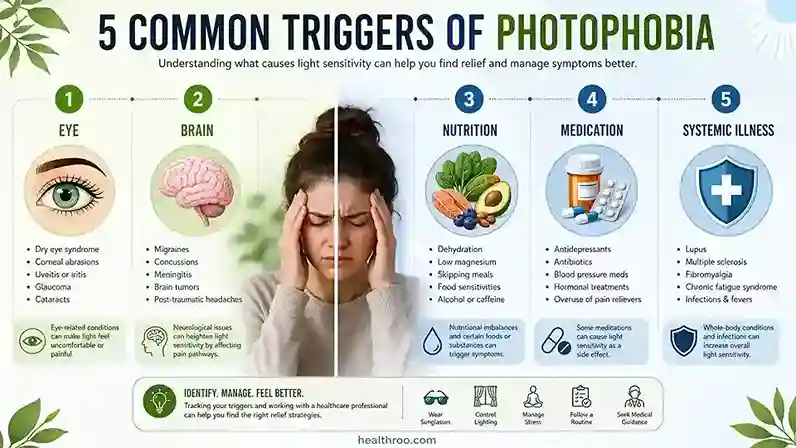
Photophobia is an abnormal sensitivity to light. It causes eye pain, discomfort, or a strong urge to squint, even in normal room light. The name suggests fear, but this condition is not a phobia. It is a physical symptom. Your eyes and brain react to light in a painful way. Doctors link this reaction to five main sources.
- Eye conditions, such as dry eye or uveitis
- Neurological triggers, such as migraine or concussion
- Nutritional deficiencies, such as low iron or low vitamin B12 levels.
- Medication side effects
- Systemic illness, such as lupus, COVID-19, or flu
| Fast Fact: Photophobia is a symptom, not a disease. It always points to something else happening in your eyes, nerves, or body. |
Photophobia vs. Fear of Light: Clearing Up the Confusion
The word photophobia comes from two Greek roots. Photo means light. Phobia means aversion. That combination confuses a lot of people. You might assume it means you are scared of light. You are not.
Clinically, this term describes pain or discomfort from light. It has no connection to anxiety or fear. Some doctors use a more precise term: photo-oculodynia. This means eye pain triggered by light. That term separates true photophobia from simple light sensitivity, like the normal squint you get walking outside on a sunny day.
| From an anthropological lens, language shapes how people describe pain. Patients often say “I’m scared of light” when they mean “light hurts my eyes.” That distinction matters for accurate diagnosis. |
What Does Photophobia Feel Like?
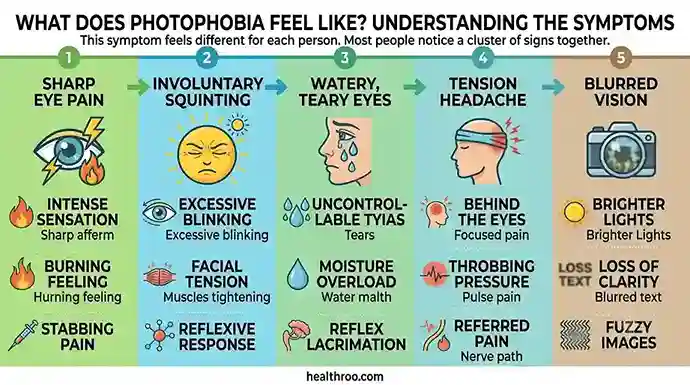
This symptom feels different for each person. Most people notice a cluster of signs together.
- Sharp eye pain or a burning sensation
- Involuntary squinting or blinking
- Watery, teary eyes
- A tension headache behind the eyes
- Blurred vision when lights get brighter
If your symptoms strike suddenly and feel severe, treat that as a signal to act quickly. We cover emergency warning signs later in this guide.
Read More Related Issue: Iron Deficiency Eye Floaters
The Mechanism: How Does Light Actually Become Painful?
Most articles list causes of this symptom. Few explain why light hurts in the first place. This section fills that gap.
The Retina-to-Pain Pathway
Light enters your eye and hits the retina. Specialized cells transform that light into electrical signals. Your optic nerve carries those signals to your brain. Normally, your brain processes this input as vision, nothing more.
But a specific group of retinal cells changes that story. These cells contain a light-sensitive protein known as melanopsin. Scientists call them intrinsically photosensitive retinal ganglion cells, or ipRGCs. Unlike standard vision cells, ipRGCs do more than support sight. They help regulate your pupil size and your internal body clock.
Read More Related Issue: Anemic retinopathy
The Trigeminal-Ocular Bridge
Here is the part most consumer health sites skip. ipRGCs send signals directly into pain-processing centers in your brain. One key route runs through your trigeminal nerve, the same nerve responsible for facial sensation.
Research using fMRI scans has traced this pathway. Light signals travel from the trigeminal ganglion to the nucleus caudalis, then to the thalamus. The thalamus manages pain perception across your whole body. This explains why light can hurt during a migraine, even without any injury to your eye. Your eye is fine. Your pain pathway is overactive
Clinical Insight:
This trigeminal-ocular bridge explains why migraine sufferers feel eye pain from light with zero visible eye damage. The pain originates in the nervous system, not the eye itself.
Why Blue Light Feels Worse
Not all light bothers your eyes equally. Blue light, the short-wavelength light common in LED bulbs and phone screens, triggers ipRGCs more strongly than warmer light. That heavier signal load means blue light causes flare-ups more often than natural, balanced sunlight.
Reda More Related Issue: Dark circles due to anemia

The Modern Environmental Angle: Why Screens and Office Lighting Make This Worse
Human eyes evolved with the sun as their constant source of light. Sunlight delivers a continuous, balanced spectrum across the day. Your visual system adapted to that pattern over thousands of years.
Modern life looks nothing like that. You spend hours under fluorescent tubes or LED panels. These sources flicker at frequencies you cannot consciously see, but your ipRGCs still detect them. Add a backlit phone or laptop screen, and your eyes process an unfamiliar, fragmented light signal all day long.
This mismatch creates what many researchers now call subclinical light sensitivity. You may not have a diagnosed eye disease. You still feel eye strain, headaches, and light discomfort by mid-afternoon.
Field Observation:
In fifteen years of wellness research, I have watched this pattern grow among office workers and students. Photophobia used to point mainly to disease. Today, it often points to your environment.
This environmental stress influences daily life in specific ways.
- Reduced focus during work hours
- Headaches during long commutes under streetlights
- Avoidance of bright social settings, like malls or restaurants
- Fatigue from screen use at school or work
Common Causes of Photophobia
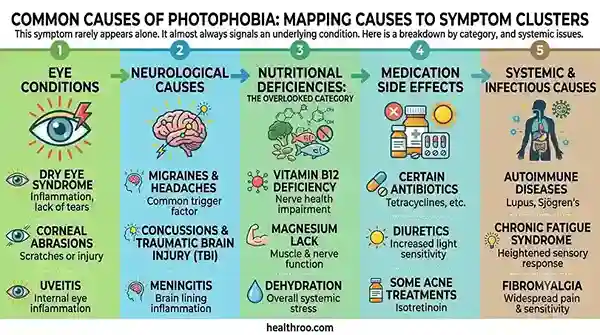
This symptom rarely appears alone. It almost always signals an underlying condition. Here is a breakdown by category.
Eye Conditions
Dry eye disease reduces the tear film that protects your cornea, leaving nerve endings exposed to light. Corneal abrasion scratches the eye’s surface, which sends sharp pain signals with any light exposure.
Corneal ulcers create open wounds on the cornea and often cause severe light sensitivity. Uveitis inflames the middle layer of your eye and frequently causes deep, aching pain in bright rooms.
Keratitis, an infection or inflammation of the cornea, produces pain that worsens with light exposure. Conjunctivitis, or pink eye, irritates the eye’s surface and adds mild to moderate discomfort.
Cataracts scatter incoming light across a clouded lens, which can make bright light feel harsh. Glaucoma raises pressure inside your eye and can trigger this reaction during pressure spikes.
Read More Related Issues: Dry eyes and iron deficiency
Neurological Causes
Migraine is the single most common neurological driver of this symptom. A concussion or brain injury disrupts normal pain processing, making light feel unusually harsh during recovery.
Meningitis, an infection of the membranes around your brain, causes severe light sensitivity along with fever and neck stiffness. Cluster headaches bring intense, one-sided pain with light discomfort as a common companion.
Blepharospasm causes involuntary eyelid spasms that often accompany this reaction. Rarer conditions, including subarachnoid hemorrhage, pituitary tumors, and progressive supranuclear palsy, can also trigger it.
Depression is the most common psychiatric condition linked to light sensitivity, and agoraphobia sometimes overlaps with reported cases as well.
Systemic and Infectious Causes
Influenza and COVID-19 both cause temporary light sensitivity tied to fever and inflammation. Lupus, an autoimmune disease, frequently causes ocular inflammation with light discomfort as a symptom. Multiple sclerosis can damage the optic nerve directly, producing this reaction alongside vision changes.
Nutritional Causes: The Overlooked Category
Almost no consumer health site explains this properly. Iron deficiency, vitamin A deficiency, vitamin B12 deficiency, and magnesium deficiency all show links to light sensitivity in clinical literature.
Critical Clinical Note:
Photophobia can appear when your ferritin (stored iron) drops low, even while your hemoglobin still reads normal on a standard blood test. This pre-anemic stage often goes undetected because most routine blood panels only flag hemoglobin, not ferritin.
If you experience fatigue, pale skin, or dark circles along with photophobia, asks your doctor specifically about getting a ferritin test. Read our detailed guide on “iron deficiency and dry eyes” and “dark circles linked to anemia” for more on this connection.
Read More Related Issue: Pale eyelids anemia
Medication Side Effects
Several common medications list light sensitivity as a side effect. These include certain antibiotics, antidepressants, dilating eye drops used during eye exams, barbiturates, benzodiazepines, chloroquine, methylphenidate, other stimulants, and opioids. If you started a new medication and noticed new light sensitivity, mention this to your prescribing doctor.
Photophobia in Adolescents: A Growing Concern
Teenagers face a unique version of this problem. Long school days under fluorescent lighting, hours of screen time for homework and social media, and irregular sleep all combine to raise photophobia risk in this age group.
Add puberty-related hormonal shifts and higher rates of iron deficiency, especially in adolescent girls, and you get a population that reports light discomfort more than most people realize. Teens rarely describe this symptom accurately to parents or teachers.
They may complain of headaches or say bright classrooms feel “annoying,” without naming the underlying cause directly. Parents and school counselors should treat repeated light complaints as a signal worth checking, not a mood issue to dismiss.
Read More Related Issue: Puberty’s impact on Adolescent Growth Spurt
Symptom Decision Tree: What Your Symptoms May Mean
Use this table as a starting guide. It does not replace a medical diagnosis.
| If you have… | Possible Cause |
| Light sensitivity plus fever | Infection |
| Light sensitivity plus migraine history | Migraine |
| Light sensitivity plus dry, gritty eyes | Dry eye disease |
| Light sensitivity plus fatigue and pale skin | Iron deficiency |
| Light sensitivity in one eye only | Corneal injury, see a doctor promptly |
| Light sensitivity plus stiff neck and fever | Possible meningitis, seek emergency care |
Differential Diagnosis at a Glance
| Condition | Pain Level | Blurred Vision | Fever | Emergency? |
| Dry eye | Mild | Occasional | No | No |
| Corneal abrasion | Severe | Yes | No | Urgent |
| Uveitis | Moderate to severe | Yes | Sometimes | Urgent |
| Migraine | Variable | Yes, with aura | No | No |
| Meningitis | Severe | Variable | Yes | Emergency |
| Iron deficiency | Mild | Rare | No | No |
Risk Factors for Photophobia
Certain factors raise your odds of developing this condition.
- Age, since both very young and older adults face higher risk
- Contact lens use, which raises corneal irritation risk
- High daily screen time
- Autoimmune disease
- Vitamin or mineral deficiency
- Diabetes, which affects eye health over time
- Pregnancy, which increases your body’s iron demand
Pregnancy Note: Rising iron demand during pregnancy can push ferritin down fast. If you are pregnant and notice new light sensitivity, bring this up at your next prenatal visit
Read More Related Issue: Anaemia eye symptoms
How Doctors Diagnose Photophobia
Your doctor will first perform a thorough eye examination. A slit lamp exam lets them view the front structures of your eye in detail. A standard vision test checks for changes in sharpness. If your doctor suspects a neurological cause, they may order an MRI to rule out structural issues in your brain.
Treatment Options for Photophobia
Medical Treatment
Your treatment plan depends entirely on the root cause. Artificial tears relieve dry eye-related light sensitivity. Antibiotics treat bacterial infections causing eye inflammation. Migraine-specific medication reduces both headache and light discomfort together.
Correcting a nutritional deficiency, such as low iron or B12, often resolves the symptom within weeks. FL-41 tinted lenses, a specific rose-colored lens designed for light-sensitive patients, filter the exact wavelengths that trigger pain.
Home and Lifestyle Management
You can support your recovery with simple daily habits.
- Lower your screen brightness, especially in the evening
- Apply a warm compress to tired eyes
- Use lubricating eye drops throughout the day
- Stay hydrated, since dehydration worsens dry eye symptoms
- Follow your migraine management plan consistently

Recovery Timeline: How Long Does Photophobia Last?
| Cause | Typical Recovery |
| Mild dry eye | Days to two weeks with treatment |
| Corneal abrasion | One to three days |
| Migraine-related | Hours to two days per episode |
| Nutritional deficiency | Weeks to months, once treated |
| Post-viral illness | One to two weeks |
Preventing Photophobia
You can lower your risk with a few consistent habits. Wear sunglasses with UV protection outdoors. Eat a balanced diet rich in iron, vitamin A, and B12. Schedule regular eye exams, even without symptoms. Ensure your home and workplace have proper, even lighting. Take screen breaks every twenty minutes.
You can lower your risk with a few consistent habits. Wear sunglasses with UV protection outdoors. Eat a balanced diet rich in iron, vitamin A, and B12. Schedule regular eye exams, even without symptoms. Ensure your home and workplace have proper, even lighting. Take screen breaks every twenty minutes.
Read More Related Issue: Common symptoms of iron deficiency anaemia
Emergency Symptoms: When to Seek Immediate Care
Most cases are manageable at home. Some symptoms demand urgent attention.
Seek emergency care immediately if you experience sudden, severe eye pain, sudden vision loss, fever combined with a stiff neck, any eye trauma, or chemical exposure to your eyes. These signs can point to serious conditions that need fast treatment.
Myths vs. Facts About Photophobia
Myth: Photophobia means you are afraid of light.
Fact: Photophobia means light causes physical pain, not fear.
Myth: This condition always signals a serious brain problem.
Fact: Most cases trace back to common issues like dry eye or migraine.
Myth: Only bright sunlight triggers light sensitivity.
Fact: Indoor LED and fluorescent lighting trigger it just as often.
A Real-World Example
Consider a composite scenario built from common patient patterns. A 28-year-old office worker spent ten hours a day facing a bright monitor. Over several weeks, dry eye symptoms developed. Painful light sensitivity followed soon after.
The worker started using artificial tears and took regular screen breaks. Within ten days, the symptoms resolved fully. This scenario reflects a typical pattern, not an actual patient case, and illustrates how quickly mild photophobia can improve with the right steps.
Frequently Asked Questions on Photophobia
Is photophobia permanent?
Photophobia is usually temporary. Most cases resolve once the underlying cause gets treated. Dry eye-related light sensitivity often clears within days once you start using artificial tears consistently. Migraine-related discomfort typically fades once the headache episode passes. Nutritional deficiency-related cases can take longer, sometimes several weeks, since your body needs time to rebuild stores of iron or B12. Permanent light sensitivity is rare and usually connects to chronic neurological or degenerative eye conditions rather than short-term triggers.
Can iron deficiency cause photophobia?
Yes, iron deficiency is a genuine and underrecognized cause of photophobia. Low ferritin, your body’s stored iron, can trigger light discomfort even while your hemoglobin level still looks normal on a standard blood test. This pre-anemic stage often gets missed because doctors do not always test ferritin unless specifically asked. If you notice this symptom along with fatigue, pale skin, or dark circles, request a ferritin test to check for this hidden connection.
Can stress cause photophobia?
Stress does not directly cause photophobia, but it strongly influences conditions that do. Chronic stress is a well-known migraine trigger, and migraines are one of the most common causes of light sensitivity. Stress also tightens muscles around your eyes and forehead, which can intensify the discomfort you already feel. Managing stress through sleep, exercise, and relaxation techniques can reduce how often you experience stress-linked episodes.
Is photophobia a symptom of migraine?
Yes, photophobia ranks among the most recognized symptoms of migraine. Many people experience it during the headache phase, and some notice it even before pain begins, during the aura stage. This happens because migraine overactivates the same nerve pathway that processes both head pain and light signals. If your light sensitivity consistently pairs with throbbing, one-sided headaches, migraine is a likely explanation worth discussing with your doctor.
What vitamin deficiency causes photophobia?
Several nutrient deficiencies link to photophobia in clinical research. Vitamin A deficiency affects your retina’s ability to process light properly. Vitamin B12 deficiency can affect optic nerve function over time. Magnesium deficiency has been associated with increased migraine frequency, which indirectly raises your risk. Iron deficiency, even at the pre-anemic ferritin stage, also shows a documented connection to light discomfort, making a balanced, nutrient-rich diet an important part of prevention.
Can dry eyes cause photophobia?
Yes, dry eye disease is one of the most frequent everyday causes of photophobia. Your tear film normally protects the nerve endings on your cornea’s surface. When that film thins out, those nerve endings become exposed and overly reactive to light. This creates a cycle where bright environments feel increasingly uncomfortable. Treating the underlying dry eye, usually with artificial tears and reduced screen time, typically improves the symptom within one to two weeks.
Does photophobia mean I have glaucoma?
Not necessarily. While glaucoma can cause photophobia, especially during pressure spikes, it is far from the most common cause. Dry eye, migraine, and minor eye irritation account for the vast majority of cases. That said, glaucoma is serious enough that sudden light sensitivity paired with eye pain, blurred vision, or headache deserves a prompt eye exam to rule it out. Do not assume the worst, but do not ignore persistent symptoms either.
Can COVID-19 cause photophobia?
Yes, photophobia has been reported as a symptom in some COVID-19 cases. Researchers link this to the viral inflammation and fever response that COVID-19 triggers throughout the body, including in the eyes. This type of light sensitivity usually resolves as the infection clears, typically within one to two weeks. If discomfort continues well after other COVID-19 symptoms resolve, mention it to your doctor to rule out other contributing causes.
Reference
American Academy of Ophthalmology – “Photophobia: Looking for Causes and Solutions”
American Academy of Ophthalmology – “MD Roundtable: Solving the Photophobia Puzzle”
PubMed / Survey of Ophthalmology – “Diagnosis, Pathophysiology, and Treatment of Photophobia” (Katz & Digre)
PubMed / Journal of Neuro-Ophthalmology – “Neurobiology of Photophobia” (Burstein et al.)
PMC / Translational Neurodegeneration – “Photophobia in Neurologic Disorders”
NCBI StatPearls – “Corneal Abrasion”
NCBI StatPearls – “Iritis (Anterior Uveitis)”
National Eye Institute (NIH) – “Dry Eye”
Mayo Clinic – “Dry Eyes: Symptoms and Causes”
World Health Organization – “Anaemia” Fact Sheet
Author Bio (Sajal Samanta)
Sajal Samanta is the founder of Healthroo and the author of this article. He holds an MSc in Anthropology and has over 15 years of experience in wellness and clinical research, including randomized controlled trial (RCT) work and adolescent counseling. His background bridges anthropological and cultural perspectives with evidence-based health writing, particularly around nutrition, eye health, and adolescent wellbeing. Sajal specializes in translating clinical research into clear, actionable guidance for general readers, with a focus on India-specific health contexts. All medical claims in his articles undergo review by qualified medical professionals before publication.









2 thoughts on “Photophobia: Causes, Symptoms, Treatment, and When to Worry”