Burning sensation in eyes? Discover the top 19 causes, including dry eyes and allergies, plus fast home remedies and when to see a doctor. Read now.
Peer-reviewed by Dr. Ramkrishna Dey, Ophthalmologist, Ocular Health Consultant. Last Reviewed, July 2026
Burning sensation in eyes is a stinging or hot discomfort on the eye surface. It happens due to tear film instability, irritation, inflammation, or nerve sensitivity. The five most common causes are:
- Dry eye syndrome
- Allergies
- Digital eye strain
- Contact lens irritation
- Blepharitis
If your eyes feel hot, gritty, or stingy right now, this guide covers all 19 causes, warning signs, and fast relief steps you can use today.

Quick Panic Button: If chemical, spray, or dust just entered your eye, flush it with clean water for 15 minutes right now. Do this before reading further. Seek emergency care if pain or redness does not improve
What Is a Burning Sensation in the Eyes?
Eye burning feels like heat, stinging, or a hot itch on your eye surface. Your eyes may also water, turn red, or feel gritty. This symptom is common. It affects people who work on screens, wear contact lenses, or live in dry, polluted cities.
In my 15 years of clinical research work, I have seen a clear pattern. Office workers report eye burning by afternoon. Older adults report eyes burning right after waking up. Both groups have the same complaint, but the cause and treatment differ completely. This is why eye burning needs a proper cause check, not a random eye drop.
I remember counseling a 26-year-old software developer from Siliguri who complained of eye burning every evening. He had tried three different drops with no relief. A simple review of his screen habits showed he blinked only six times a minute instead of the usual fifteen to twenty.
His eyes were not diseased. They were simply starved of moisture from reduced blinking. This kind of real-world case shows why understanding the root cause matters more than chasing another bottle of drops.
From an anthropological lens, this symptom also reflects a shift in how we use our eyes. Our ancestors used their eyes mostly outdoors, in natural light, with frequent distance shifting.
Modern eyes stay fixed on a screen for hours, close to the face, under artificial light. This mismatch between our biology and our lifestyle is a quiet driver behind rising cases of eye burning across age groups.
How Common Is Eye Burning?
Dry eye disease affects a large share of adults across India, especially in urban areas with high pollution and heavy screen use. Studies from Indian ophthalmology clinics report rising cases of digital eye strain among students and IT professionals. Eye burning is now one of the top reasons Indian patients visit eye clinics, alongside blurred vision and redness.
Burning Eyes vs Normal Eye Discomfort
Normal eye tiredness fades after rest. Eyes burning that return daily, or last for hours, signal an underlying issue. Watch for these differences.
| Normal Eye Tiredness | Burning Sensation in Eyes |
| Fades after a short nap | Returns even after rest |
| No redness | Often comes with redness or watering |
| Improves with blinking | Stays even after blinking often |
| No discharge | May come with sticky discharge |

Read More Related Post: anemic retinopathy
Why Does Burning Happen Inside the Eye?
Your eye surface depends on a thin tear film to stay smooth and pain-free. When this film breaks down, nerves on your cornea get exposed to air. This triggers the burning eyes that you feel.
Tear Film Instability
Your tears have three layers: oil, water, and mucus. If any layer weakens, tears evaporate fast. This dries out your cornea and causes this burning symptom within minutes of screen use or wind exposure.

Corneal Nerve Exposure
Your cornea holds thousands of nerve endings. When the tear film thins, these nerves sit exposed. Even mild air movement can trigger sharp burning.
Inflammatory Cytokines and Ocular Surface Inflammation
Chronic dryness triggers small inflammatory signals called cytokines. These substances irritate your eye surface further. This creates a cycle: dryness causes inflammation, and inflammation causes more dryness and burning.
Tear Evaporation and Environmental Triggers
Air conditioning, ceiling fans, and low humidity speed up tear evaporation. Your blink rate also drops during screen use, sometimes by half. Fewer blinks mean faster evaporation and quicker burning.
Neuropathic Pain: The Nerve Dysfunction Pathway
Some patients feel eyes burning even when their eye surface looks completely healthy on examination. Dr. Ramkrishna Dey, Ophthalmologist, explains this using two pain types. Nociceptive pain comes from actual surface damage, like dryness or injury. Neuropathic pain comes from the nerves themselves misfiring, without visible damage. This second pathway explains why some patients get no relief from standard drops. Their nerves need a different treatment approach.
This distinction matters more than most people realize. A patient with nociceptive pain usually improves within days of using lubricating drops. A patient with neuropathic pain may see no change at all, since the problem sits in the nerve signal, not the tear film. Recognizing this difference early saves months of frustration and unnecessary drop switching.
Expert Insight from Dr. Ramkrishna Dey: If your eye burning does not improve after two weeks of lubricating drops, ask your doctor about corneal nerve sensitivity testing.
19 Causes of Burning Sensation in Eyes
Eye burning can come from several categories of triggers. To make things easier to understand, we’ve organized all 19 causes into the following categories.
Ocular Surface Causes
- Dry eye syndrome: the leading cause of eyes burning worldwide.
- Blepharitis: eyelid inflammation, often with crusty lashes.
- Meibomian gland dysfunction: blocked oil glands that destabilize your tear film.
- Ocular rosacea: skin rosacea that also inflames your eyelids and eyes.
Allergic and Inflammatory Causes
- Allergic conjunctivitis: pollen, dust, or pet dander trigger this reaction.
- General eye allergies: seasonal or year-round sensitivity.
- Eye surface inflammation: from prolonged irritant exposure.
Infectious Causes
- Conjunctivitis: viral or bacterial infection, often called pink eye.
- Eye infection: any microbial infection causing burning and discharge.
Environmental and Lifestyle Causes
- Digital eye strain: long screen time reduces your blink rate.
- Air conditioning exposure: dries your eye surface fast.
- Low humidity: common in winter and in AC rooms.
- Smoke exposure: from cooking, traffic, or cigarettes.
- Chemical exposure: cleaning sprays, perfumes, or fumes.
- Dust and pollution: common triggers in Indian cities.
- Chlorinated pool water: strips your natural tear layer.
- Wind exposure: speeds up tear evaporation outdoors.
- Photokeratitis: UV exposure from strong sunlight or welding light.
Mechanical and Injury Causes
- Contact lens irritation: overwear or poor hygiene.
Other mechanical triggers include corneal abrasion, a foreign object in your eye, and direct eye injury. These need urgent attention rather than home care.
Each category above needs a different response. Allergic and infectious causes often clear with targeted medication. Environmental causes improve once you reduce exposure. Mechanical causes need immediate eye protection and sometimes emergency care. Knowing which category fits your symptoms is the first real step toward relief.
Systemic and Nutritional Causes
Autoimmune conditions like Sjögren syndrome reduce tear and saliva production. Some medications, including antihistamines and blood pressure drugs, dry out your eyes as a side effect. Nutritional gaps also matter. Low vitamin A, vitamin B12, or omega-3 fatty acids can weaken your tear film and worsen eye burning.
Related Reading:
Nutritional deficiency does not only affect your eyes through dryness. Iron deficiency can also cause blurred vision, eye floaters, and dark circles. Read our detailed guides on iron deficiency and blurred vision, dark circles due to anemia, and iron deficiency eye floaters for the full picture.

Symptom Comparison Table
Matching your exact symptoms to a likely cause saves time and worry.
| Symptom Combination | Likely Cause |
| Burning plus itching | Allergy |
| Burning plus discharge | Infection |
| Burning plus blurry vision | Dry eye |
| Burning plus severe pain | Corneal ulcer, seek urgent care |
| Burning after screen use | Digital eye strain |
| Burning without redness | Neuropathic pain or early dry eye |
Read More Related Issue: Fatigue and Eye Strain (asthenopia)
Why Burning Can Happen Without Redness
Many people search for this because it feels confusing. This burning symptom without redness usually points to early dry eye disease or nerve-related pain. Your blood vessels have not yet widened, so redness has not appeared, but your nerves already sense the dryness. This stage is easy to treat if caught early.
How Long Does the Burning Last? A Timeline Guide
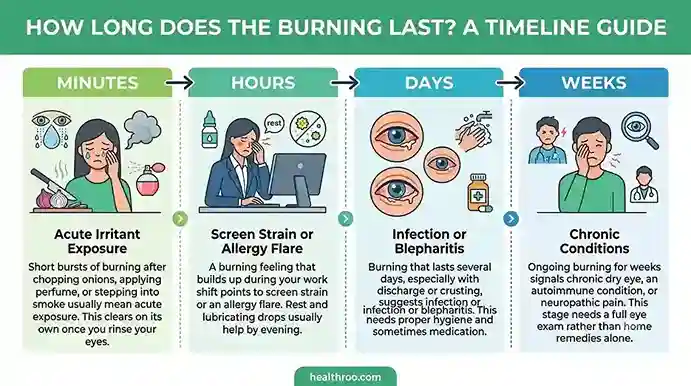
Minutes
Short bursts of burning after chopping onions, applying perfume, or stepping into smoke usually mean acute irritant exposure. This clears on its own once you rinse your eyes.
Hours
A burning feeling that builds up during your work shift points to screen strain or an allergy flare. Rest and lubricating drops usually help by evening.
Days
Burning that lasts several days, especially with discharge or crusting, suggests infection or blepharitis. Effective treatment usually combines proper hygiene with medication when necessary.
Weeks
Ongoing burning for weeks signals chronic dry eye, an autoimmune condition, or neuropathic pain. This stage needs a full eye exam rather than home remedies alone.
Case Comparison: Two Patients, Two Different Causes
Consider two real patterns seen in clinic. A 30-year-old IT professional complains of stinging eyes that peak by 4 PM, ease overnight, and return the next afternoon. His triggers are screen time and low blink rate. His fix is behavioral: breaks, blinking drills, and preservative-free drops at his desk.
A 58-year-old woman complains of gritty, hot eyes every morning, along with crusted lashes. Her triggers point toward blepharitis and meibomian gland dysfunction. Her fix needs warm compresses, lid hygiene, and a doctor visit for prescription support if symptoms persist. The same complaint, two entirely different roots, two entirely different plans.
Risk Factors for Burning Sensation in Eyes
Certain groups face higher risk of eye burning:
- Long daily screen time
- Office and IT professionals
- Contact lens wearers
- Frequent air conditioning exposure
- Age above 50 years
- Women after menopause
- Smokers
- People with allergies
- Dusty or polluted living areas
- Frequent eye cosmetic use
Toxicity in Everyday Eye Cosmetics
Your daily makeup routine can quietly worsen eyes burning. Waterproof mascaras and lash serums often contain parabens and benzalkonium chloride. These ingredients can clog your meibomian glands over time. Blocked glands reduce the oil layer in your tears, which speeds up evaporation and burning. Check your cosmetic labels and remove eye makeup fully before bed.
Fragrance-heavy eyeliners and glitter-based shadows also carry a higher irritation risk. If you notice eyes burning shortly after applying a new product, stop use immediately and patch test on your wrist before trying it near your eyes again.
Is It Serious? Diagnostic Flowchart

Ask yourself these questions in order:
- Is it one eye or both eyes?
- Is there redness?
- Is there discharge?
- Is your vision affected?
- Is the pain severe?
If you answered yes to vision changes or severe pain, seek same-day medical care. Otherwise, home care is usually a safe first step.
What an Ophthalmologist Looks for During an Eye Exam
Dr. Ramkrishna Dey explains that a standard eye exam for eye burning includes a slit-lamp check of your cornea and eyelids, along with tear film assessment.
Diagnostic Tests
- Fluorescein staining: highlights dry patches on your cornea.
- Schirmer test: measures your tear production.
- Meibomian gland evaluation: checks for blocked oil glands.
- Allergy history review: links your symptoms to known triggers.
Questions Your Eye Doctor May Ask
Expect questions about your screen time, contact lens habits, recent illness, medication use, and how long this burning symptom has lasted. Honest answers speed up an accurate diagnosis.
Bring a simple symptom log to your appointment. Note the time of day your eyes burn, what you were doing before it started, and how long relief from any drop lasted. This small habit gives your doctor real data instead of vague memory, and it often shortens the path to the right diagnosis.
Home Remedies for Fast Relief
Quick Relief Checklist
- Use preservative-free artificial tears
- Apply a warm compress for blepharitis or MGD
- Apply a cold compress for allergy flare-ups
- Blink fully and often during screen work
- Take a screen break every 20 minutes
- Drink enough water through the day
- Run a humidifier in dry or AC rooms
- Avoid rubbing your eyes
Try This Now:
Close your eyes for 20 seconds, then blink slowly ten times. This simple step often eases mild eye burning within minutes
Evidence Grading Table
| Treatment | Scientific Evidence |
| Artificial tears | Strong |
| Warm compress | Moderate |
| Omega-3 supplements | Mixed |
| Blinking exercises | Moderate |
Medical Treatments for Burning Sensation in Eyes
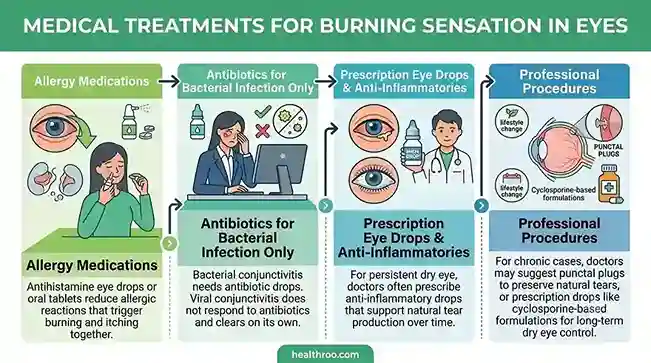
Prescription Eye Drops and Anti-Inflammatories
For persistent dry eye, doctors often prescribe anti-inflammatory drops that support natural tear production over time.
Allergy Medications
Antihistamine eye drops or oral tablets reduce allergic reactions that trigger burning and itching together.
Antibiotics for Bacterial Infection Only
Bacterial conjunctivitis needs antibiotic drops. Viral conjunctivitis does not respond to antibiotics and clears on its own.
Professional Procedures
For chronic cases, doctors may suggest punctal plugs to preserve natural tears, or prescription drops like cyclosporine-based formulations for long-term dry eye control.
These procedures work best when paired with lifestyle changes. A punctal plug without screen breaks or lid hygiene gives only partial relief. Treat medical procedures as one part of a full protocol, not a standalone fix.
Prevention Tips for Burning Sensation in Eyes
- Follow the 20-20-20 rule: every 20 minutes, look 20 feet away for 20 seconds
- Clean and replace contact lenses as directed
- Wear UV-protective sunglasses outdoors
- Reduce total screen exposure where possible
- Avoid smoke-filled spaces
- Remove eye makeup fully every night
- Wash your hands before touching your eyes
- Set a hydration reminder if you often forget to drink water
- Position your screen slightly below eye level to reduce surface exposure
- Choose a mattress and pillow height that keeps your face away from direct fan airflow at night
Myth vs Fact About Burning Sensation in Eyes
Myth: A burning sensation in eyes always means infection. Fact: Most cases come from dry eye or environmental irritants, not infection.
Myth: Any eye drop cures every cause of burning. Fact: The wrong drop can worsen allergic burning if used for dry eye, or the reverse.
Myth: Red eyes always mean allergies. Fact: Many causes of a burning sensation in eyes show no redness at all.
When Eye Symptoms Need Immediate Medical Attention
Seek same-day medical care if your eye burning comes with any of the following:
- Sudden vision loss
- Severe eye pain
- Chemical burn exposure
- Direct eye trauma
- Thick yellow or green discharge
- High fever alongside eye symptoms
- Severe redness in only one eye
- Symptoms lasting more than 48 hours despite home care
Red Flags That Require Same-Day Medical Care
Dr. Ramkrishna Dey stresses that sudden vision changes or chemical exposure should never wait for a routine appointment. These signs need urgent evaluation to protect your long-term vision.
Impact of Burning Sensation in Eyes During Adolescence
Teenagers face rising screen exposure through online classes, gaming, and social media. This raises their risk of digital eye strain and eyes burning at a young age. Many teens ignore the symptoms and rub their eyes instead of resting them, which can worsen irritation.
Parents should watch for frequent eye rubbing, squinting, or complaints of tired eyes after study hours. Simple steps like screen breaks, proper lighting, and adequate sleep protect your teen’s eye comfort and long-term visual health.
Epidemiology: How Many People Experience Burning Eyes?
Dry eye disease affects a significant share of adults globally, with higher rates reported in urban Indian populations due to pollution and screen dependence. Digital eye strain prevalence has grown sharply among students and remote workers since the shift toward online study and work.
Contact lens wearers report dry eye symptoms, including burning, at notably higher rates than non-wearers. Allergy-related eye irritation also rises during pollen season across northern India. Aging populations, especially post-menopausal women, show the highest rates of chronic dry eye and related burning eyes.
Gender patterns also matter for planning your care. Women report chronic dryness and burning eyes nearly twice as often as men after age 50, largely due to hormonal shifts that reduce tear gland output.
Younger patients under 40 show a more even split between genders, since screen time and environmental exposure affect everyone regardless of sex. Understanding where you fit in this pattern helps set realistic expectations for how long treatment may take to show results.
FAQs of Burning sensation in eyes
Why do I have a burning sensation in eyes but no redness?
A burning sensation in eyes without redness usually points to early dry eye disease or nerve-related discomfort. Your blood vessels have not widened yet, so visible redness has not developed, but your corneal nerves already sense the dryness or irritation. This early stage responds well to lubricating drops and reduced screen time. If the burning sensation in eyes continues for more than a week without redness, get a tear film assessment to rule out neuropathic causes or early autoimmune conditions.
Can dehydration cause a burning sensation in eyes?
Yes, dehydration reduces your overall tear production, which can trigger a burning sensation in eyes. Your tears depend on adequate body fluid levels to maintain their watery layer. When you are dehydrated, this layer thins faster, exposing your corneal nerves to air and causing stinging discomfort. Drinking enough water through the day, along with using artificial tears, often eases dehydration-related burning within a short time. Chronic dehydration combined with AC exposure worsens this effect significantly.
Does lack of sleep cause a burning sensation in eyes?
Yes, poor sleep reduces your natural tear production and slows the repair of your eye surface overnight. This often results in a burning sensation in eyes upon waking or throughout the next day. Sleep deprivation also increases screen use late at night, which compounds digital eye strain. Aim for seven to eight hours of quality sleep, and avoid screens right before bed, to reduce morning burning and support better tear film stability over time.
Why does my burning sensation in eyes get worse after phone use?
Phone use reduces your blink rate significantly, sometimes by more than half of your normal rate. Fewer blinks mean your tear film evaporates faster, exposing sensitive corneal nerves and causing a burning sensation in eyes. Holding your phone close to your face also increases blue light and glare exposure, which adds further strain. Following the 20-20-20 rule and consciously blinking more often during phone use can meaningfully reduce this burning sensation.
Can anxiety trigger a burning sensation in eyes?
Yes, anxiety can indirectly trigger a burning sensation in eyes through reduced blink rate, muscle tension around your eyes, and shallow breathing patterns. Stress hormones may also affect your tear gland function over time. Many anxious individuals unconsciously stare at screens or documents for long periods without blinking, worsening dryness. Managing stress through breaks, deep breathing, and adequate rest can reduce both your anxiety symptoms and the associated burning sensation in eyes.
Why does a burning sensation in eyes happen more at night?
Nighttime burning often results from a full day of tear evaporation, screen exposure, and reduced blinking finally catching up with your eye surface. Indoor heating or air conditioning running through the evening also dries the air further. Some people naturally produce fewer tears during sleep, called nocturnal lagophthalmos, leading to morning or nighttime burning sensation in eyes. Using a lubricating gel before bed can prevent this overnight dryness effectively.
Can a burning sensation in eyes signal diabetes or a nutritional deficiency?
Yes, uncontrolled diabetes can reduce tear production and nerve sensitivity, leading to a chronic burning sensation in eyes. Nutritional gaps, particularly low vitamin A, vitamin B12, and omega-3 fatty acids, also weaken your tear film and corneal health. If your burning sensation in eyes persists despite standard drops, ask your doctor about blood sugar testing and nutrient level checks. Correcting an underlying deficiency often improves both your eye comfort and overall health.
Which eye drops actually help a burning sensation in eyes?
Preservative-free artificial tears offer the strongest evidence for relieving a burning sensation in eyes caused by dryness. For allergy-related burning, antihistamine eye drops work better than plain lubricants. Avoid drops marketed only for redness removal, since they can mask symptoms without treating the actual cause. If your burning sensation in eyes does not improve within two weeks of consistent drop use, consult an ophthalmologist for a proper diagnosis and targeted treatment.
Reference
American Academy of Ophthalmology, Dry Eye Syndrome
American Academy of Ophthalmology, Dry Eye Syndrome Preferred Practice Pattern 2023
PubMed, Neuropathic Corneal Pain and Dry Eye: A Continuum of Nociception
PMC/NIH, Corneal Nerve Abnormalities in Painful Dry Eye Disease Patients
Mayo Clinic, Blepharitis Symptoms and Causes
Cleveland Clinic, Blepharitis (Eyelid Inflammation)
PMC/NIH, Digital Eye Strain: A Comprehensive Review
PMC/NIH, Photokeratitis Induced by Ultraviolet Radiation in Travelers
PMC/NIH, Sjögren’s Syndrome: More Than Just Dry Eye
Review of Optometry, Dry Eye Catalysts Found in All Walks of Life
Prevalence of Dry Eye Diseases in a Rural and Urban Population in West Bengal and the Role of Air Pollution
Author Bio (Sajal Samanta):
Sajal Samanta holds an MSc in Anthropology, is a medical content writer, and works as an adolescent health counselor, bringing 15+ years of experience in RCT clinical research to Healthroo’s ocular health content. Sajal’s writing combines evidence-based medical explanation with a cross-cultural, South Asian lens, focusing on how lifestyle, environment, and nutrition shape common eye conditions. This article draws on that research background, the literature review, and reviews from research schools, as well as published ophthalmology literature and Indian population health data.