
Fatigue and Eye Strain (asthenopia) persisting? Learn the main causes (screen use, anemia, sleep), key warning signs, and simple daily fixes to feel better quickly.
Peer-Reviewed by Dr. Ramkrishna Dey, Ophthalmologist, Ocular Specialist, last reviewed July,2026
As your workday begins, you settle into your desk, ready to spend the next several hours focused on your computer screen. By evening, your eyes burn, and your body feels drained. The two often arrive together, and most people never learn why.
This guide explains the real link between the two. You will learn the causes, the warning signs, and the fixes that actually work. The advice here comes from clinical research and years of anthropological study on how modern screen habits change the human body.
What Is Fatigue and Eye Strain
Fatigue is physical or mental exhaustion that does not go away with normal rest. Eye strain, also called asthenopia, is a group of symptoms that show up after your eye muscles work too hard for too long.
Fatigue and eye strain can be acute or chronic. The acute form fades after a short break. The chronic form builds up over weeks and needs a real change in habits to fix.
Why Fatigue and Eye Strain Happen Together
Your eyes do not work alone. When your eye muscles strain to focus, your brain has to process that extra effort. This raises your overall mental workload. That is why the two show up as a pair, not as two separate problems.
Screen use has grown fast across India and other countries. Urban professionals and students in India now spend several hours a day on phones and laptops, based on global screen-time tracking data from Statista. This rise in screen time is a major driver behind the growing number of tired-eye and low-energy complaints seen in clinics today.
Quick Answer:
Fatigue is body and mind exhaustion. Eye strain is muscle overload in your eyes. Together, they form a loop, tired eyes send more signals to your brain, and your brain works harder to keep your vision clear.
Symptoms: How Fatigue and Eye Strain Show Up
Knowing the signs early helps you stop the problem before it slows down your whole day.
Eye Strain Symptoms
- Tired eyes that feel heavy
- Burning or stinging sensation
- Dry eyes
- Red or bloodshot eyes
- Blurred vision
- Double vision in rare cases
- Headaches near your forehead or temples
- Neck and shoulder pain
- Sensitivity to light, also called photophobia. Read more in our detailed guide on [photophobia and its causes](#)
Fatigue Symptoms
- Physical tiredness that does not lift with rest
- Mental exhaustion and brain fog
- Low energy through the day
- Poor concentration and slow thinking
Read More Related Issue: Anemic retinopathy

When these two symptom groups overlap, your body is asking for a change in routine.
How Eye Strain Causes Fatigue: The Science Behind It
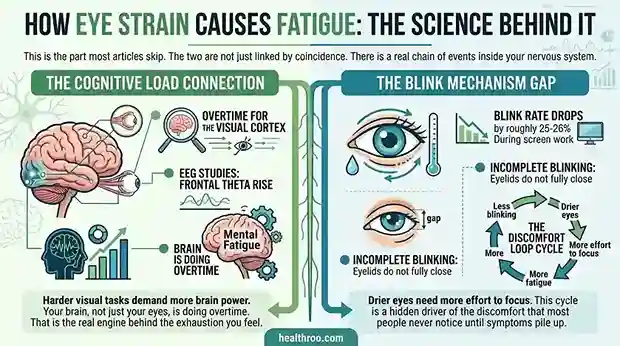
This is the part most articles skip. The two are not just linked by coincidence. There is a real chain of events inside your nervous system.
The Cognitive Load Connection
Your eye muscles report to your visual cortex, the part of your brain that processes what you see. When your eyes strain to focus on a screen or fine print, your visual cortex has to work overtime too.
Harder visual tasks demand more brain power. Studies using EEG scans show a rise in frontal theta brain activity during long digital tasks. This kind of activity is linked to mental fatigue. In simple words, your brain, not just your eyes, is working overtime. That is the real engine behind the exhaustion you feel.
The Blink Mechanism Gap
Blinking keeps your eyes moist and rested. During screen work, your blink rate can drop by roughly 25 to 26 percent. You also blink less completely, which means your eyelids do not fully close each time.
This creates a loop:
Less blinking leads to drier eyes. Drier eyes need more effort to focus. More focusing effort adds to your fatigue. This cycle is a hidden driver of the discomfort that most people never notice until symptoms pile up.
From an anthropological research perspective:
Human eyes evolved to scan wide, changing landscapes, not fixed glowing screens at a fixed distance. Our visual behaviour has changed faster than our biology. This mismatch is a core reason modern screen fatigue feels different from the eye tiredness our grandparents described.
Causes of Fatigue and Eye Strain
Many factors combine to create this problem. Some come from your devices. Others come from your body.
Digital Eye Strain by Device
Different screens create different strain patterns.
- Computers and monitors: Poor viewing distance, wrong monitor height, and glare from windows or lights all add strain.
- Smartphones: You hold phones closer to your face. Small fonts force your eyes to work harder to focus.
- Tablets and gaming devices: Long sessions at close range similarly strain your eye muscles.
- Children: Even one hour of gaming can measurably lower blink rate in children. This raises concern for both visual comfort and long-term myopia risk in young eyes. Our adolescent health section covers this risk in more depth below.
- AR and VR headsets: These devices are linked to bigger drops in blink frequency than regular screens, an emerging concern as headset use grows.
Sleep Deprivation and the Fatigue and Eye Strain Loop
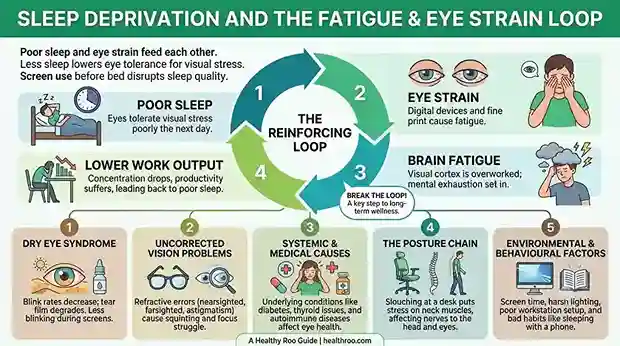
Poor sleep and eye strain feed each other. When you sleep less, your eyes tolerate visual stress poorly the next day. At the same time, screen use before bed, especially with bright light, disrupts your sleep quality.
The loop looks like this: poor sleep leads to eye strain, eye strain adds to brain fatigue, and brain fatigue lowers your work output the next day. Breaking this loop is one of the fastest ways to feel better long term.
Dry Eye Syndrome
Your tear film keeps your eyes smooth and comfortable. Reduced blinking, discussed above, destabilizes this tear film. Once your tear film breaks down, symptoms often get worse within the same day.
Uncorrected Vision Problems
Nearsightedness, farsightedness, and astigmatism all force your eye muscles to work harder than they should. This compensatory strain is a direct and common cause, especially in people who have never had an eye test.
Systemic and Medical Causes
The causes are not always about screens. Several body-wide conditions can trigger the same symptoms.
- Anemia: Low iron reduces oxygen delivery to your eye muscles and brain. Many people show symptoms before a standard blood count flags iron deficiency, a pattern we call pre-anemic ferritin decline that may be experianced from fatigue and eye strain.
Read More Related Post: Iron Deficiency Eye Floaters
- Vitamin and mineral deficiencies: Low iron, vitamin B12, and vitamin A are all linked to visual fatigue, which may be a sign of fatigue and eye strain.
Read More Related Issue: Blurred Vision Iron Deficiency
- Thyroid disorders: Thyroid disorders can cause ongoing fatigue and may also affect the muscles that control eye movement, leading to discomfort or vision-related problems.
- Diabetes: Blood sugar swings can blur vision and add to fatigue.
- Chronic fatigue syndrome: This condition often includes eye discomfort as a secondary symptom.
- Migraine: Light sensitivity and visual disturbance often overlap with these symptoms.
- Medication side effects: Some common drugs list dry eyes or fatigue as side effects.
Read More Related Issue: Conjunctival Pallor Anemia
The Posture Chain
Your body posture affects your eyes more than you think. Poor posture strains your neck muscles. Neck strain forces your eye muscles to compensate as you tilt or crane to see your screen. This chain often ends in added brain fatigue without you realizing your chair or desk height is the real problem.
Environmental and Behavioural Factors
Poor lighting, glare, prolonged reading, and psychological stress all add extra load to your visual system. Combined, these everyday habits quietly build up into full-blown discomfort over time.
Read More Related Issue- Photophobia
Fatigue and Eye Strain Risk Factors by Occupation and Age
Some groups face a higher risk due to their daily routines.
By Occupation
Office workers, students, gamers, programmers, designers, drivers, pilots, elderly adults, and contact lens wearers all face above-average exposure to the causes we covered. Jobs with long, fixed-distance screen time carry the highest risk.
By Age Group Experience from Fatigue and Eye Strain
- Children and adolescents: Prolonged near-work raises myopia progression risk. Our adolescent health content explains this connection further.
- Working-age adults, 18 to 55: This group faces the biggest hit to productivity and workplace performance.
- Presbyopic adults, 40 and above: Switching focus between a screen and printed paper becomes harder with age, adding a distinct layer of strain.
Productivity Loss and Psychological Impact of Fatigue and Eye Strain
Productivity and Performance
Chronic symptoms slow down your pace of work. Office performance drops. Students lose concentration and see a dip in academic output. Even small symptoms, repeated daily, add up to real productivity loss.
Psychological and Emotional Effects
Stress, anxiety, and a general sense of burnout often appear alongside chronic visual strain. These effects are linked to visual strain, though the connection is correlational rather than a proven direct cause in every case. If you feel low mood along with tired eyes, treat both your visual habits and your mental wellbeing as connected, not separate, problems.
Fatigue and Eye Strain Symptom Timeline During Continuous Screen Use
- 30 minutes: Your blink rate starts dropping. Mild dryness sets in.
- 1 hour: Accommodative fatigue begins. Mild headache risk rises.
- 2 hours: Blurred vision, eye pressure, and neck stiffness become noticeable.
- 4 hours or more: Brain fatigue compounds, concentration drops, and migraine risk rises in people prone to headaches.

Diagnosis of Fatigue and Eye Strain
A proper diagnosis rules out serious causes and confirms the real source of your symptoms.
- Comprehensive eye examination: Checks the overall health of your eyes.
- Vision testing: Confirms or rules out a refractive error.
- Dry eye assessment: Tests like tear break-up time show how stable your tear film is.
- Blood tests: If fatigue continues without a clear eye cause, doctors check for anemia, thyroid problems, or diabetes.
| What Ophthalmologists Look For: During a digital eye strain workup, an eye doctor typically checks your blink completeness, tear film stability, refractive error, and how your eyes track between near and far objects. This full picture helps separate simple strain from a deeper underlying issue of Fatigue and eye strain. |
Differential Diagnosis
This condition can mimic other eye conditions. Glaucoma, cataracts, retinal disease, and optic neuritis all have distinct red flags, such as sudden vision loss or severe eye pain, that separate them from ordinary strain. Most cases are not linked to these serious conditions, but persistent or worsening symptoms deserve a proper eye exam to rule them out.
Treatment for Fatigue and Eye Strain
Lifestyle Measures
- The 20-20-20 rule: Every 20 minutes, look at something 20 feet away for 20 seconds. This is very effective for the problem of fatigue and eye strain
- Scheduled screen breaks: Step away from your screen every hour.
- Better sleep hygiene: Maintain a consistent sleep schedule to give your eyes adequate time to rest, recover, and stay comfortable throughout the day.
- Hydration: Drink enough water throughout the day to support tear production.
- Light exercise and stretching: Simple neck and shoulder stretches ease the posture chain discussed earlier.
Medical Treatment
- Prescription glasses: Computer-specific lenses reduce focusing strain.
- Artificial tears: These restore moisture and reduce dryness-driven strain.
- Blue light filtering: Evidence here is mixed, not a guaranteed fix. We cover this in detail in the myths section below.
- Treating underlying disease: Managing anemia, thyroid issues, or diabetes often reduces symptoms as a side benefit.
Prevention of Fatigue and Eye Strain
- Set up proper screen ergonomics, with your monitor at eye level and an arm’s length away.
- Use proper ambient lighting and reduce glare from windows or overhead lights.
- Blink consciously and often during screen work.
- Eat a balanced diet that supports eye health, including iron-rich and vitamin-rich foods.
- Book regular comprehensive eye exams, even without symptoms.

When to See a Doctor for Fatigue and Eye Strain
Most cases improve with rest and better habits. While many eye problems resolve with proper care, certain warning signs require immediate medical attention to prevent potentially serious complications.
Watch for these red flags:
- Sudden vision loss
- Severe headache
- Sharp eye pain
- Double vision
- Persistent fatigue despite lifestyle changes
- Any neurological symptom, such as weakness, slurred speech, or confusion
If you notice any of these signs, book an eye exam or see a doctor right away instead of waiting it out at home.
Medical Disclaimer
The information on fatigue and eye strain provided in this article is intended for general educational purposes only and does not constitute medical advice, diagnosis, or treatment. Healthroo’s content on fatigue and eye strain is developed with reference to current clinical literature and is reviewed by qualified medical professionals, but it cannot account for your individual health history or circumstances.
Always consult a licensed ophthalmologist, optometrist, or physician before making changes to your health routine based on this article, especially if you experience persistent or severe symptoms of fatigue and eye strain. Healthroo and its contributors are not liable for outcomes resulting from self-directed use of this information. If you experience sudden vision loss, severe eye pain, or neurological symptoms, seek emergency medical care immediately.
Fatigue vs Eye Strain vs Dry Eye vs Migraine vs Vision Problems
This table helps differentiate the condition from other disorders that may cause similar or overlapping symptoms.
| Condition | Primary Symptom | Typical Trigger | Relief Approach |
| Fatigue | General tiredness, low energy | Poor sleep, overwork | Rest, sleep hygiene |
| Eye Strain | Sore or tired eyes, hard to focus | Prolonged near work, screens | 20-20-20 rule, breaks |
| Dry Eye | Burning, gritty feeling | Reduced blinking, dry environment | Artificial tears, humidity |
| Migraine | Throbbing headache, light sensitivity | Varies: stress, screens, hormones | Medical management, avoiding triggers |
| Vision Problems | Persistent blur, squinting | Uncorrected refractive error | Corrective lenses, eye exam |
Blue Light Myths: What the Evidence Actually Shows
Marketing claims about blue light often go far beyond what research supports. Recent reviews of blue-light-filtering lenses found limited evidence that they meaningfully reduce eye strain or protect long-term eye health.
| Myth | What Evidence Shows |
| Blue light glasses cure eye strain and tiredness | They may offer mild comfort for some, but the 20-20-20 rule and ergonomics show stronger results |
| Screen blue light causes permanent retinal damage | Current evidence does not support this claim for normal screen use |
| Filtering blue light fixes dry eyes | Dryness is mainly linked to blink rate, not blue light exposure |
| Night mode filters guarantee better sleep | Reducing screen brightness and use before bed matters more than colour filtering alone |
Treat blue light glasses as an optional comfort tool, not a proven solution to the problem of fatigue and eye strain.
Expert Insight: An Anthropological Lens on Fatigue and Eye Strain
Sajal Samanta, founder of Healthroo, brings an anthropological view to this topic. Human visual behaviour developed over thousands of years around natural light, distant landscapes, and constantly shifting focus points. Screens compress all of that into one fixed, glowing rectangle held close to your face for hours at a stretch.
This shift in behaviour, not just biology, explains why this feels like a modern epidemic rather than an old complaint. Understanding your visual habits as a behavioural pattern, not just a medical symptom, opens up more practical fixes than medicine alone can offer.
This expert view connects directly with Healthroo’s broader eye health and anemia content cluster, where similar patterns around vision, nutrition, and daily habits repeat across conditions like iron-deficiency eye floaters and blurred vision from anemia.
Fatigue and Eye Strain in Adolescents
Teenagers face a unique version of this problem. Schoolwork, online classes, and social media use combine to create some of the longest daily screen exposure across any age group.
Growing eyes are more sensitive to prolonged near work. Studies link extended screen time in children and teens to faster myopia progression. Add late-night phone use and irregular sleep, and adolescents end up with a stacked risk: eye strain, fatigue, and reduced academic focus all at once.
Parents and teachers can help by encouraging screen breaks between study blocks, setting a firm no-screen wind-down before bed, and watching for early signs like squinting, rubbing eyes, or complaints of headaches after school. Catching this pattern early protects both vision and long-term study performance.
Frequently Asked Questions on Fatigue and Eye Strain
Can eye strain make you tired?
Yes, Fatigue and Eye Strain are closely linked. When your eyes work hard to focus during screen use or reading, that effort adds to your overall mental workload. Your brain processes the strain signals from your eye muscles alongside everything else you are focusing on. Over a full day, this buildup shows up as general tiredness that pairs with your sore eyes after long screen sessions.
Can fatigue cause blurry vision?
General fatigue can weaken your ability to focus clearly, so a combination of fatigue and eye strain often shows up as blurred vision that comes and goes through the day. This is especially common in the late afternoon or evening, after hours of visual effort have already worn down your eye muscles. If blurred vision clears up after rest, it usually points to this everyday cause rather than a permanent vision problem, though it is still worth a checkup if it happens often.
Is eye strain permanent?
No, in most cases fatigue and eye strain are temporary conditions that improve once you rest your eyes, take regular breaks, and correct any underlying vision problem with proper glasses. However, if the root cause, such as an uncorrected refractive error or a systemic condition like anemia, is left untreated, symptoms can keep coming back. Persistent symptoms that do not improve with basic rest are a sign to book a proper eye exam.
How long does eye strain last?
Mild fatigue and eye strain typically clear up within a few hours after you stop the activity that caused it, especially with rest, hydration, and reduced screen exposure. If your symptoms last longer than a full day or keep getting worse instead of better, this is not typical for simple strain. In that case, an eye exam can rule out dry eye disease, an uncorrected prescription change, or another medical cause behind your symptoms.
Can anemia cause eye strain?
Yes, anemia reduces the oxygen delivered to your eye muscles and brain, which can directly contribute to fatigue and eye strain. Many people notice pale eyelids or a washed-out look to their eyes well before a standard blood test flags low iron. This is why Healthroo’s eye health guidance also covers iron-deficiency-related symptoms like eye floaters and conjunctival pallor alongside screen-related tiredness, since the two often overlap in the same person.
Does dehydration cause eye fatigue?
Yes, dehydration reduces your tear production and can affect your concentration, which compounds both fatigue and eye strain during long work or study sessions. When your body lacks enough fluid, your tear film becomes less stable, leading to dryness and a gritty feeling in your eyes. Pairing simple hydration habits with regular screen breaks is one of the easiest ways to reduce this daily discomfort without any medical intervention.
Are blue light glasses effective for eye strain?
Evidence on this is mixed. Blue light glasses may offer some comfort for certain people, but current research does not show them as a reliable fix for fatigue and eye strain on their own. The strongest, most consistent evidence still points toward the 20-20-20 rule, proper monitor distance, and correct lighting as the most effective tools. If you already use blue light glasses and feel they help, there is no harm in continuing, but do not rely on them as your only defence.
Is eye strain dangerous?
Typically not. Fatigue and eye strain are uncomfortable but not sight-threatening on their own, and most cases resolve fully with rest and better screen habits. However, persistent symptoms alongside red-flag signs, such as sudden vision loss, severe headache, or double vision, should never be ignored. In those cases, the discomfort may be masking a more serious underlying condition that needs prompt medical attention.
Refrence
Mayo Clinic, Eyestrain: Symptoms and Causes — supports Sections 2, 8, 9.
Cleveland Clinic, Eye Strain — supports Sections 1, 2, 9.
American Optometric Association, Computer Vision Syndrome — supports Sections 1, 4, 9.
EyeWiki (American Academy of Ophthalmology), Computer Vision Syndrome (Digital Eye Strain) — supports Sections 4, 13.
Moorfields Eye Hospital NHS Foundation Trust, 10 Steps for Digital Eye Strain Relief — supports Sections 9, 10
PMC/NIH, Digital Eye Strain: A Comprehensive Review — supports Sections 3, 4, 13.
PubMed, Portello JK et al., Blink Rate, Incomplete Blinks and Computer Vision Syndrome, Optom Vis Sci 2013 — supports Section 3
Nature, Scientific Reports, Videoconference Fatigue from a Neurophysiological Perspective (EEG/ECG study) — supports Section 3.
PMC, The Relationship Between Dry Eye Disease and Digital Screen Use — supports Sections 3, 4.
PMC, Incidence and Progression of Myopia in Urban School Children in Delhi (North India Myopia Study) — supports Sections 4, 5, adolescent section.
PMC, Blue Light Exposure: Ocular Hazards and Prevention, A Narrative Review — supports Section 13
Author Bio
Sajal Samanta holds an MSc in Anthropology and works as an adolescent counselor, bringing over 15 years of experience in RCT clinical research and as a medical content writer to Healthroo’s health content. His work bridges anthropological research on human behavior with clinical evidence, focusing on how modern habits, including screen use, shape physical and mental wellbeing. He founded Healthroo to give South Asian readers health guidance that is medically accurate, culturally relevant, and easy to act on.









Preventable i9nforamtive content
Good Content but i have doubt on some issue